

Where Healing Truly Begins: The Nervous System
Healing starts only when the nervous system feels safe.
Many people come to us saying:
“My treatment is going fine … but I feel lost.”
“I keep waking up every two hours, and thoughts don’t let me sleep.“
“My mind doesn’t stop, even on days my reports are okay.”
But let us tell you,
This is not a weakness. This is not a lack of positivity. This is the nervous system doing exactly what it’s designed to do—protect you.
What Cancer Does to the Nervous System
Cancer is not only a physical diagnosis. It is a constant signal of threat to the brain.
Appointments. Reports. Waiting. Uncertainty. Side effects. Even on “good days,” the nervous system often stays alert.
From a research perspective, studies in psycho-neuroimmunology confirm that chronic stress keeps the body in sympathetic dominance—also known as the fight-or-flight state. Notably, a randomized controlled trial at Tata Memorial Hospital, Mumbai, found that yoga practices improved quality of life and reduced stress in breast cancer patients undergoing treatment.
When this state continues for weeks or months, people may experience:
- Persistent fatigue that rest doesn’t fix
- Anxiety, fear, or emotional numbness
- Sleep disturbances
- Digestive issues
- Difficulty concentrating (“chemo fog”)
- Reduced muscle strength and slower recovery
This is not “all in the mind.” This is neurobiology.
The Science: Why the Nervous System Matters for Healing
Your autonomic nervous system controls:
- Breathing
- Heart rate
- Digestion
- Hormonal balance
- Immune response
- Emotional regulation
- Sleep and repair
It has two main modes:
- Sympathetic Nervous System: Survival. Alertness. Protection.
- Parasympathetic Nervous System: Rest. Repair. Healing. Integration.
Most healing processes—such as immune modulation, tissue repair, and emotional regulation—occur only when the parasympathetic system is active. Findings from Kiecolt-Glaser et al., 2020, Nature Reviews Immunology, and Indian studies such as those from AIIMS, New Delhi (Telles et al., 2015, Indian Journal of Physiology and Pharmacology), confirm that restoration and repair are enhanced when the body finds safety.
If the body doesn’t feel safe, healing is delayed.
This is where our work begins.
What Emotional Well-Being Means at EaseMyCancer
Emotional well-being here is not about therapy or forced positivity.
We do not ask:
“Why do you feel this way?”
“Let’s analyse your thoughts.”
“Think positive” “You are strong.”
Instead, we ask: How can we help your body feel safe again?
Our emotional well-being work focuses on:
- Nervous system regulation
- Emotional steadiness
- Deep rest
- Inner resilience
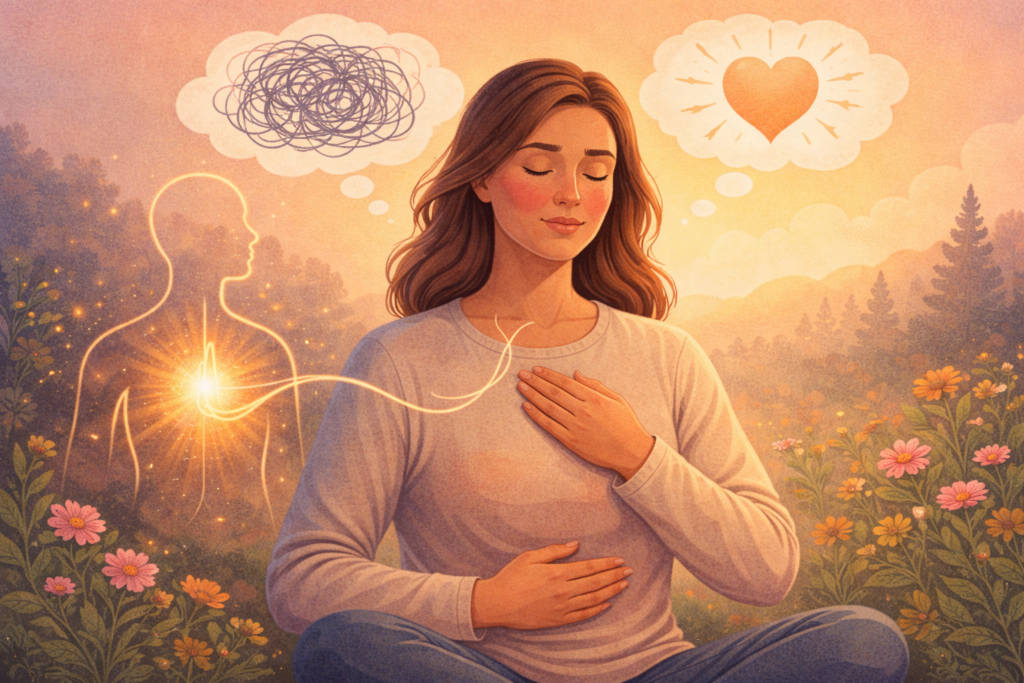
When the nervous system settles, emotions naturally soften. The mind becomes clearer. The body gets space to heal.
How the Mind Is Involved (Without Overthinking It)
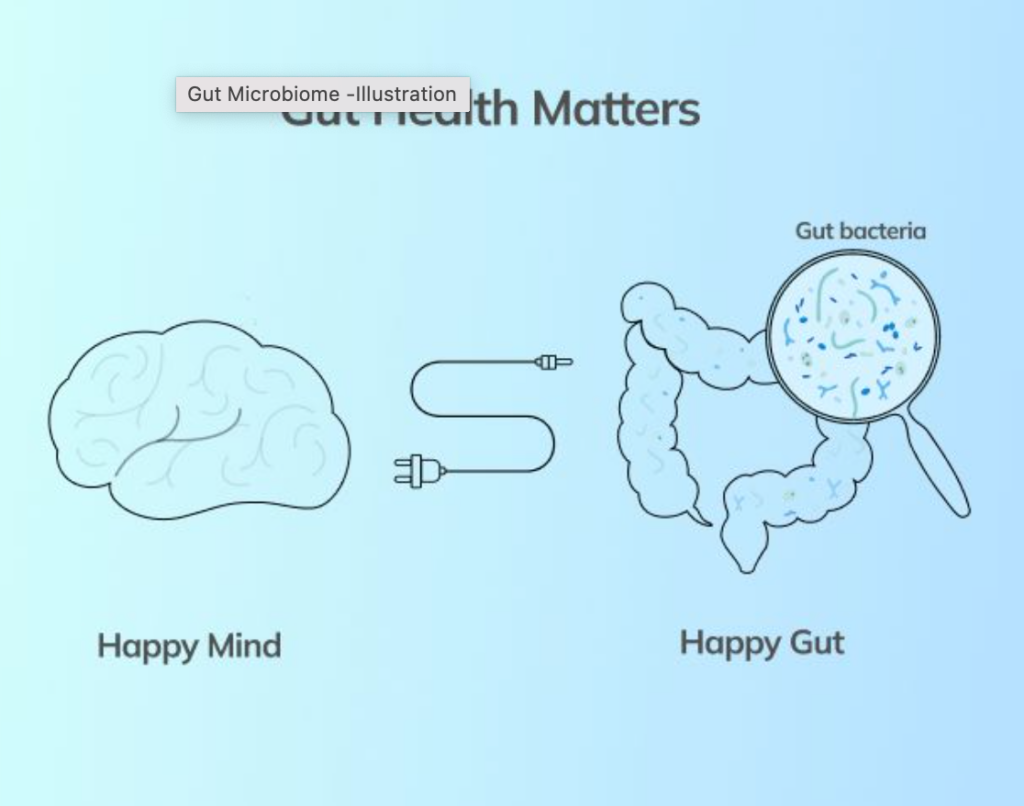
The mind and nervous system are in constant conversation. A fearful thought changes breathing. Shallow breathing increases anxiety. Anxiety reinforces physical tension. Tension feeds fatigue and poor sleep. This loop is automatic—not conscious.
At EaseMyCancer, we don’t break this loop by thinking harder. We interrupt it from the body upward. When the body slows down, the mind follows.
How We Work at EaseMyCancer
Gentle practices. Strong science. No force. Everything we offer is grounded in both ancient wisdom and modern research, including studies from India’s leading cancer and medical centers.
Our emotional well-being practices are designed to:
- Activate the parasympathetic nervous system.
- Reduce stress hormone load.
- Improve sleep and energy.
- Build emotional resilience over time.
Research indicates that Yoga Nidra, especially when combined with breathing practices, supports emotional well-being, sleep, and cognitive clarity in individuals undergoing cancer treatment https://pubmed.ncbi.nlm.nih.gov/38595893/. Anand DN, Dr LSG, Mr AR (2015) also improved the quality of sleep among cancer patients.
Yoga Nidra: Teaching the Body How to Rest Again
A guided practice where the body enters deep rest while the mind stays gently aware. This state:
- Mimics deep sleep
- Signals safety to the brain
- Allows emotional processing without overwhelm
Our patients say: It felt like the missing piece. Perfectly blended with the yoga session—I felt fully rested and deeply relaxed.
Pranayama: Breathing Safety Into the System
Slow, structured breathing has a direct influence on vagal tone—the nerve responsible for parasympathetic activation. Benefits include:
- Reduced anxiety
- Better sleep
- Improved oxygenation
- Calmer emotional baseline
Breath becomes a tool for regulation, not effort.
Chanting: Sound, Vibration, and Emotional Balance
Chanting for emotional well-being draws from ancient Indian yogic and Vedic traditions, where sound (Nāda) is regarded as a powerful tool for harmonizing the body, mind, and emotions. For individuals affected by cancer, chanting offers a gentle yet deeply supportive practice during periods of fear, uncertainty, fatigue, and vulnerability.
Through rhythmic repetition and vibration, chanting naturally slows the breath and stimulates the parasympathetic nervous system. The sound vibrations travel through the chest, throat, and head, helping release emotional tension—particularly around the heart and throat centers—while fostering grounding, calmness, and inner steadiness.
Traditional yogic texts describe mantra repetition (japa) as a means to quiet mental fluctuations( Patanjali yog sutra 1.28- 1.29) and cultivate emotional stability, acceptance, and surrender. While scientific research on chanting in cancer care is still emerging, evidence from studies on slow vocalization, mantra repetition, and sound-based meditation suggests benefits for stress reduction and parasympathetic activation, supporting emotional resilience and nervous system balance.
Emotional Well-Being and Mental Well-Being: Understanding the Difference
In everyday language, emotional well-being is often assumed to mean therapy or counselling. This is a common misunderstanding—especially in the context of cancer care.
At EaseMyCancer, we distinguish clearly between mental well-being and emotional well-being because they work at different levels and serve different needs.
Mental Well-Being (Psycho-Oncology Support)
Mental well-being focuses on the mind and emotional experiences that arise during cancer. This includes:
- Talking through fears, anxiety, grief, and uncertainty
- Processing difficult emotions and life changes
- Understanding thought patterns and emotional responses.
- Structured one-on-one or group psycho-oncology sessions
This work is reflective, conversational, and insight-oriented. At EaseMyCancer, this support is offered through dedicated psycho-oncology and group sessions.
Emotional Well-Being (Nervous System–Based Care at EaseMyCancer)
Emotional well-being, as practiced at EaseMyCancer, works primarily with the body and nervous system. It focuses on:
- Regulating the nervous system
- Creating a sense of safety and calm in the body
- Supporting emotional stability without analysis
- Allowing emotions to settle through rest, breath, and rhythm
These practices—such as Yoga Nidra, Pranayama, and Chanting—are integrated as closing, restorative practices within our yoga sessions. Internationally, Harvard and Massachusetts General Hospital research supports the benefits of Yoga Nidra and mindfulness for nervous system regulation (Streeter et al., 2012, Medical Hypotheses).
There is no emotional processing, discussion, or interpretation. The intention is simple: to help the body shift out of survival mode and into a state of rest and repair.
Why We Offer Both
Mental well-being helps people understand and process what they are experiencing. Emotional well-being helps the body feel safe enough to heal. They are not interchangeable. They are complementary.
At EaseMyCancer, we offer dual support, so individuals receive support at the level they need, when they need it.
Both are essential parts of holistic cancer care.
When the Nervous System Feels Safe, Healing Changes
When parasympathetic dominance increases, we often see:
- Improved sleep
- Reduced fatigue
- Better emotional regulation
- Increased physical recovery capacity
- Greater sense of inner steadiness
Not overnight. Not dramatically. But consistently and sustainably.
References
Anand, D. N., L. S. G., & A. R. (2015). Effect of Yoga Nidra on anxiety, depression, and quality of sleep among cancer patients. Manipal Journal of Nursing and Health Sciences, 1(1).
https://impressions.manipal.edu/mjnhs/vol1/iss1/8
Nuzhath, F. J., Patil, N. J., Sheela, S. R., & Manjunath, G. N. (2024). Effect of Yoga Nidra and breathing practices on anxiety and depression in women undergoing cervical cancer treatment: A randomized controlled clinical study. Cureus.
https://pubmed.ncbi.nlm.nih.gov/38595893/
Author(s). (2024). Role of yogic breathing practices in improving quality of life, emotional well-being, sleep, and fatigue in cancer patients: A narrative review. Journal Name.
https://pubmed.ncbi.nlm.nih.gov/38524027/
Momeni, M., Khatooni, M., Alizadeh, A., & Mohebbi, S. (2025). Effect of pranayama on fatigue and sleep disturbances in women undergoing chemotherapy. BMC Complementary Medicine and Therapies.
https://bmccomplementmedtherapies.biomedcentral.com/articles/10.1186/s12906-025-04981-0
Patañjali. (n.d.). Yoga Sūtras (Sūtras 1.28–1.29). Classical yogic text on mantra japa and mental stillness.
Frequently asked Questions
- I don’t want to burden my family. Should I keep my feelings to myself?
Many patients feel this way, but carrying everything alone often increases emotional strain. Having a safe space to express feelings — without judgment — can be deeply relieving and healing.
- I’m trying to stay positive, but I don’t feel okay inside. Is something wrong with me?
No. You do not have to feel positive all the time to heal. Allowing yourself to feel what you feel is healthier than forcing positivity. Emotional honesty is a form of strength.
- Is anxiety or fear about recurrence normal, even after treatment ends?
Yes. Fear of recurrence is very common and understandable. Emotional support helps you learn how to manage these thoughts rather than be controlled by them.
- Can emotional practices like meditation or guided relaxation really help?
Yes. Gentle practices such as breathing, Yoga Nidra, and mindfulness help shift the body from “fight or flight” into a calmer state, supporting better sleep, emotional balance, and nervous system regulation.
- What if I don’t know how to express my feelings?
That is very common. You do not need the “right words.” Emotional support helps you slowly understand and express what you’re experiencing, at your own pace.