

Cancer treatments like chemotherapy, radiation, and surgery save lives—but they can also lead to muscle loss, fatigue, reduced oxygenation, poor circulation, nervous system imbalance, and emotional stress. When combined with inactivity, degeneration often outpaces regeneration.
Medical science confirms: Exercise is medicine.
OncoYoga delivers therapeutic, safe movement adapted to treatment-affected bodies, preserving strength, improving circulation, and enhancing overall well-being.
How Cancer Treatment Affects the Body
Cancer therapies can cause:
- Muscle wasting and weakness
- Reduced oxygen delivery and energy production
- Poor lymphatic drainage and toxin accumulation
- Decreased blood flow to the brain
- Nervous system imbalance
- Loss of motivation and emotional resilience
OncoYoga addresses these effects without overloading fragile systems.
How OncoYoga Helps
1. Movement as Medicine
Safe, guided yoga practice helps:
- Slow muscle atrophy and preserve strength
- Improve oxygenation and tissue repair
- Stimulate lymphatic flow and circulation
- Support cognitive function and emotional well-being
2. Yoga Holds (Sthira)
- Maintains muscle integrity and neuromuscular strength
- Improves oxygen saturation in tissues
- Trains the nervous system to tolerate stress safely
- Holds are modified and supported for treatment-affected bodies
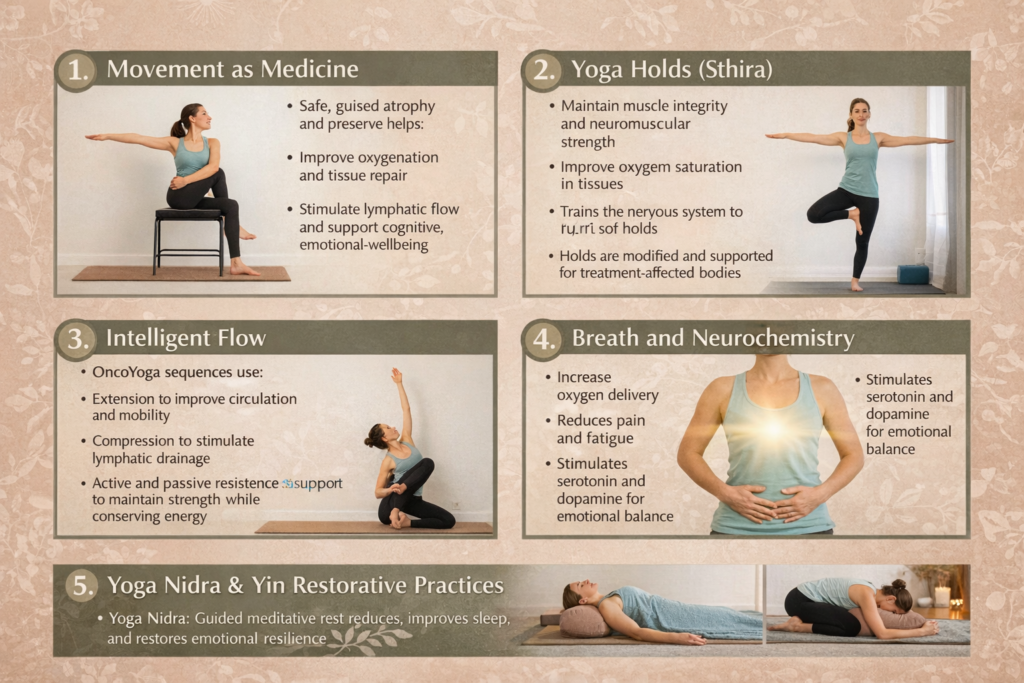
3. Intelligent Flow
Onco Yoga sequences use:
- Extension to improve circulation and mobility
- Compression to stimulate lymphatic drainage
- Twists and rotations to support organ function
- Active and passive resistance to rebuild strength while conserving energy
4. Breath and Neurochemistry
- Increases oxygen delivery
- Calms the nervous system
- Reduces pain and fatigue
- Stimulates endorphins and dopamine for emotional balance
5. Yoga Nidra & Yin Restorative Practices
- Yoga Nidra: Guided meditative rest reduces stress, improves sleep, and restores emotional resilience
- Yin Restorative Yoga: Gentle supported stretches release tension, improve circulation, and allow tissues to heal passively
How Yoga Helps Post-Treatment
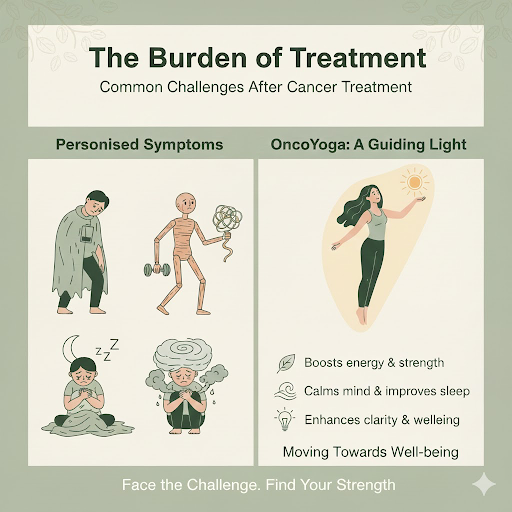
After treatment, patients may face:
- Persistent fatigue
- Weak muscles and reduced mobility
- Emotional stress and anxiety
- Sleep disturbances
- Cognitive difficulties (“chemo brain”)
OncoYoga post-treatment:
- Rebuilds functional strength: Gentle, progressive poses help restore muscle integrity
- Improves flexibility and balance: Prevents falls and supports daily activity
- Supports emotional recovery: Breathwork, meditation, and Yoga Nidra reduce anxiety and stress
- Enhances circulation and detox pathways: Restorative poses help lymphatic drainage and tissue recovery
- Improves quality of life: Patients feel more confident, active, and emotionally resilien
Research shows yoga interventions in cancer survivors can reduce fatigue, improve walking and functional capacity, and support overall recovery (PubMed: 38011074; PubMed: 31165647).
Frequently Asked Questions (FAQs)
1. Can yoga prevent cancer?
No. Yoga cannot prevent or cure cancer, but it supports how to deal with it including well-being, reducing fear and stress, and complementing conventional treatment.
2. How will yoga help me during cancer treatment?
Cancer treatment affects muscles, circulation, energy levels, and the nervous system.
Cancer-informed yoga supports the body by:
- Activating and preserving muscles to protect joints and mobility
- Reducing cancer-related fatigue by improving circulation and movement efficiency
- Supporting lymphatic flow during increased cellular breakdown
- Calming the nervous system, which helps mood, focus, and emotional resilience
Yoga during treatment is gentle, adaptive, and focused on helping the body cope better—without exhaustion.
3. Can yoga help me rebuild muscle after treatment?
Yes. Cancer treatment commonly causes muscle loss, which affects balance and joint safety.
Yoga helps rebuild muscle by:
- Using gentle isometric holds to activate muscles safely
- Providing low-load resistance through controlled movement
- Improving neuromuscular coordination for balance and daily activity
- Supporting recovery through consistency rather than intensity
This approach rebuilds functional strength while protecting joints and conserving energy.
4. Is yoga safe during treatment?
Yes. OncoYoga is carefully adapted for individuals undergoing cancer treatment. Practices are modified based on medical status, energy levels, and treatment side effects, using supportive props, gentle movements, and structured sequencing. Sessions are designed to avoid overexertion and are guided by trained professionals experienced in oncology-aware care.
5. Do I need prior yoga experience?
No. OncoYoga is suitable for beginners, and instructors adapt all poses to individual strength, mobility, and treatment stage.
Why Choose OncoYoga at Easemycancer
- Counteracts treatment-related degeneration
- Maintains strength, dignity, and independence
- Supports healing without harm
- Keeps the body engaged in life, energy, and hope
- Integrates Yoga Nidra and Yin Restorative practices for deep recovery
OncoYoga is science-backed, patient-centered, and fully adaptable, helping patients survive, recover, and thrive alongside cancer treatment.
Read this
OncoYoga: Movement as Supportive Medicine
Cancer and its treatments place extraordinary demands on the body and mind. Chemotherapy, radiation, surgery, and long-term medications can affect muscles, joints, circulation, energy levels, the lymphatic system, and the nervous system. Alongside medical treatment, supportive care plays a crucial role in helping the body cope, adapt, and recover.
OncoYoga is a cancer-informed yoga approach that uses movement as supportive medicine—not as a replacement for treatment, but as a complementary practice designed to work safely alongside it.
How Cancer Treatment Affects the Body
Cancer treatment often leads to:
- Muscle loss and reduced strength
- Joint stiffness and decreased mobility
- Cancer-related fatigue
- Changes in circulation and lymphatic flow
- Heightened stress, anxiety, and nervous system overload
These changes can make even basic daily activities feel exhausting. OncoYoga is designed specifically to address these challenges with care, precision, and adaptability.
How OncoYoga Helps During Cancer Treatment
1. Preserving Muscle Function and Joint Safety
Reduced activity during treatment can lead to muscle deconditioning and joint instability. OncoYoga uses gentle, supported movements to activate muscles without strain, helping preserve joint integrity and functional mobility. This support is essential for maintaining independence and reducing injury risk.
2. Reducing Cancer-Related Fatigue
Cancer-related fatigue is not simply “tiredness”—it is a complex, treatment-related condition. Research shows that gentle, consistent movement improves circulation and movement efficiency, helping the body use energy more effectively. OncoYoga supports circulation without overwhelming the system, helping patients feel steadier rather than depleted.
3. Supporting Lymphatic Flow
Cancer treatment increases cellular breakdown and fluid load in the body. The lymphatic system relies on muscle movement and breath to function effectively. Gentle, rhythmic movements combined with breath awareness help support lymphatic circulation, contributing to fluid balance and overall comfort.
4. Calming the Nervous System
A cancer diagnosis and ongoing treatment activate prolonged stress responses in the nervous system. OncoYoga incorporates slow movement, breath regulation, and rest to support nervous system regulation. This can improve sleep, emotional resilience, focus, and the ability to cope with treatment-related stress.
During treatment, OncoYoga is gentle, adaptive, and intentional. The goal is not performance, flexibility, or fitness—it is to help the body cope better with treatment demands, without exhaustion.
Can OncoYoga Help After Cancer Treatment?
Yes. Recovery does not end when treatment stops. Many individuals experience lingering weakness, balance issues, stiffness, and low stamina after treatment.
How OncoYoga Supports Post-Treatment Recovery
1. Rebuilding Muscle Safely
Cancer treatment commonly leads to muscle loss, affecting balance and joint safety. OncoYoga uses gentle isometric holds—activating muscles without excessive movement—allowing strength to rebuild safely and progressively.
2. Low-Load Resistance Without Strain
Controlled movements and supported weight-bearing postures provide low-load resistance that helps rebuild muscle while protecting joints and conserving energy.
3. Improving Balance and Neuromuscular Coordination
Treatment can disrupt the connection between the brain and muscles, increasing fall risk. OncoYoga improves neuromuscular coordination, posture, and movement confidence for daily activities.
Slow, intentional movements retrain the brain –muscle communication, helping restore timing, balance, and coordination affected by treatment or fatigue.
Postural muscles are gently activated, engaging deep stabilisers to support upright posture without straining weakened muscles or joints.
4. Recovery Through Consistency, Not Intensity
Post-cancer recovery responds best to regular, moderate movement rather than high-intensity exercise. OncoYoga emphasizes consistency, helping restore functional strength and endurance while respecting the body’s healing timeline.
A Supportive, Integrative Approach to Healing
OncoYoga does not promise cures. It offers support—for the body, the nervous system, and overall quality of life. When practiced under cancer-informed guidance, yoga becomes a safe, evidence-aligned tool that complements medical care and empowers individuals throughout their cancer journey.
Movement, when done thoughtfully and compassionately, becomes a form of supportive medicine.