

When Cancer Affects More Than the Body: Maya’s Path to Support
Behind every scan and appointment is a person navigating fear, hope, and change. Psycho-oncology helps patients like Maya feel less alone.
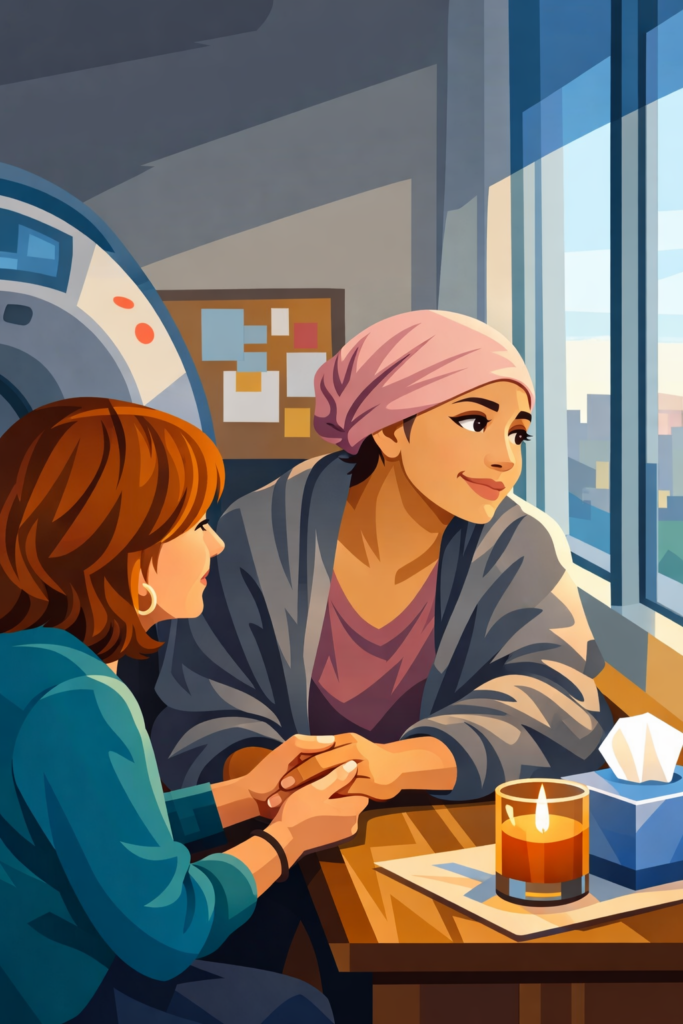
When Maya heard the word’ cancer,’ time seemed to stand still. Scans blurred into chemotherapy appointments, paperwork, and logistics that seemed to multiply overnight. But beneath the medical rush was something quieter — the nights she jolted awake, the days she couldn’t swallow food because her stomach knotted with fear. It did not appear on any lab report, yet it shaped her life just as much.
Then her oncologist handed her a small card: “We offer psycho-oncology.”
She assumed it meant she was “not coping well enough.” What it actually offered was a way to move through treatment with steadier footing — and her story reflects something many patients experience but rarely name.
The Challenges You Don’t See on a Scan
For Maya,
Her experience is far from unusual. A cancer diagnosis doesn’t just affect the body; it quietly reshapes identity, relationships, and a person’s sense of safety. Recent global research highlights the widespread nature of this invisible burden. A 2025 meta-analysis of cancer survivors (PubMed) found that nearly one in four continue to experience significant anxiety or depression after treatment, often alongside persistent sleep problems and ongoing emotional strain. These struggles are rarely evident in test results, but they significantly influence how people cope with treatment, make decisions, and navigate everyday life.
This invisible distress isn’t a side note; it influences how people tolerate treatment, adhere to medications, and manage symptoms. Ignoring it doesn’t make it go away — it simply pushes suffering underground.
What Psycho-Oncology Really Is
Maya’s first appointment surprised her. There was no couch, no deep childhood excavation. Instead, the therapist asked practical questions: How are you sleeping? What scares you the most right now? What helps on the days you can’t get through lunch?
This is the core of Psycho-oncology, the clinical field that supports the psychological, social, and behavioural dimensions of cancer. Services include routine distress screening, brief psychological therapy, exploration on the impact of distressing physical symptoms, family support, and psychiatry when needed.
Major guidelines — including the NCCN’s Distress Management recommendations JNCCN+1— now treat emotional distress as a vital sign, like pain or fever. Not optional. Not “nice to have.” But essential.
Why Support Helps: What Research evidence shows
Maya started Cognitive Behavioural Therapy to manage the loop of anxiety that always peaked before scans. She learned breathing techniques that reduced nausea during chemotherapy. She joined a small support group where people didn’t flinch when she admitted fears she couldn’t say aloud to family.
Her experience mirrors what large reviews and meta-analyses have shown:
Structured psychosocial interventions improve mood, sleep, coping, and quality of life across cancer types. Studies published in PMC and Nature consistently report reductions in anxiety, depression, and distress.
Some earlier research suggested psychosocial care might even extend survival, but the evidence is mixed. What is clear — and powerfully consistent — is that these interventions improve the lived experience of cancer in ways patients feel every day.
Why you may not find this help everywhere?
Despite its benefits, Psycho-oncology isn’t widely accessible. Global reviews, including those in The Lancet’s eClinical Medicine PMC+2PubMed+2 The Lancet+1, describe a stubborn gap:
too few clinicians, inconsistent screening, stigma, and health systems where mental and medical care rarely meet.
It means many people like Maya — people who would benefit deeply — never make it to a psycho-oncologist at all.
What holistic and integrated Care Looks Like
Maya was fortunate. Her clinic had built a system where mental health wasn’t an afterthought. They used four simple strategies:
- Routine distress screening at diagnosis, treatment changes, and survivorship, similar to models endorsed by NCCN education.nccn.org
- Stepped care, starting with brief interventions and escalating to specialists, a model supported by multiple PMC studies.
- Team-based planning, where oncology, nursing, psycho-oncology, social work, and palliative care coordinated treatment — an approach detailed in JNCCN
- Clear messaging that mental health care is part of cancer care, not a sign of weakness — a strategy supported in implementation studies on ScienceDirect
These changes restored something Maya feared she would lose:
Bringing the Story Back to the Centre
With support, Maya missed fewer chemo appointments. She slept better. Her panic before scans eased from a tidal wave to small, manageable ripples. She didn’t feel chaotic and uncertain — she felt equipped. And that difference shaped every part of her experience.
Her story is not unusual. It’s simply what happens when psychological care is treated as integral rather than optional.
A Closing Thought: No One Should Have to Fight Their Mind Alone
Cancer treatment is technical, precise, and lifesaving. But survival isn’t just measured in tumour shrinkage or scan results — it’s measured in how people live while being treated.
Psycho-oncology helps people navigate the hardest parts of the journey with more clarity, stability, and dignity. As evidence grows and guidelines endorse its importance, health systems must move these services from the margins to the centre.
Because when someone hears the word cancer, their mind goes to battle too — and caring for that part of the fight should be routine, available and standardised.
Selected references and sources
- Patricia Ganz, “Meeting Psychosocial Health Needs of Cancer Survivors,” Cancer Currents (NIH/NCI blog). Cancer.gov
- NCCN Guidelines® Insights: Distress Management (Version 2.2023). JNCCN+1
- Lui F., et al., “A systematic review and meta-analysis of psychosocial interventions for cancer patients,” 2023. PMC
- Bognár S.A., et al., “Psychological intervention improves quality of life in cancer patients,” Scientific Reports, 2024. Nature
- Bergerot C., et al., “Global unmet psychosocial needs in cancer care” (eClinicalMedicine, 2024) PMC+2PubMed+2
- Global Prevalence of Mental Health Problems Among Cancer Survivors: A Meta-Analysis From 31 Countries. PubMed. 2025. Available at: https://pubmed.ncbi.nlm.nih.gov/39780039/ PubMed
Rajeshwari