
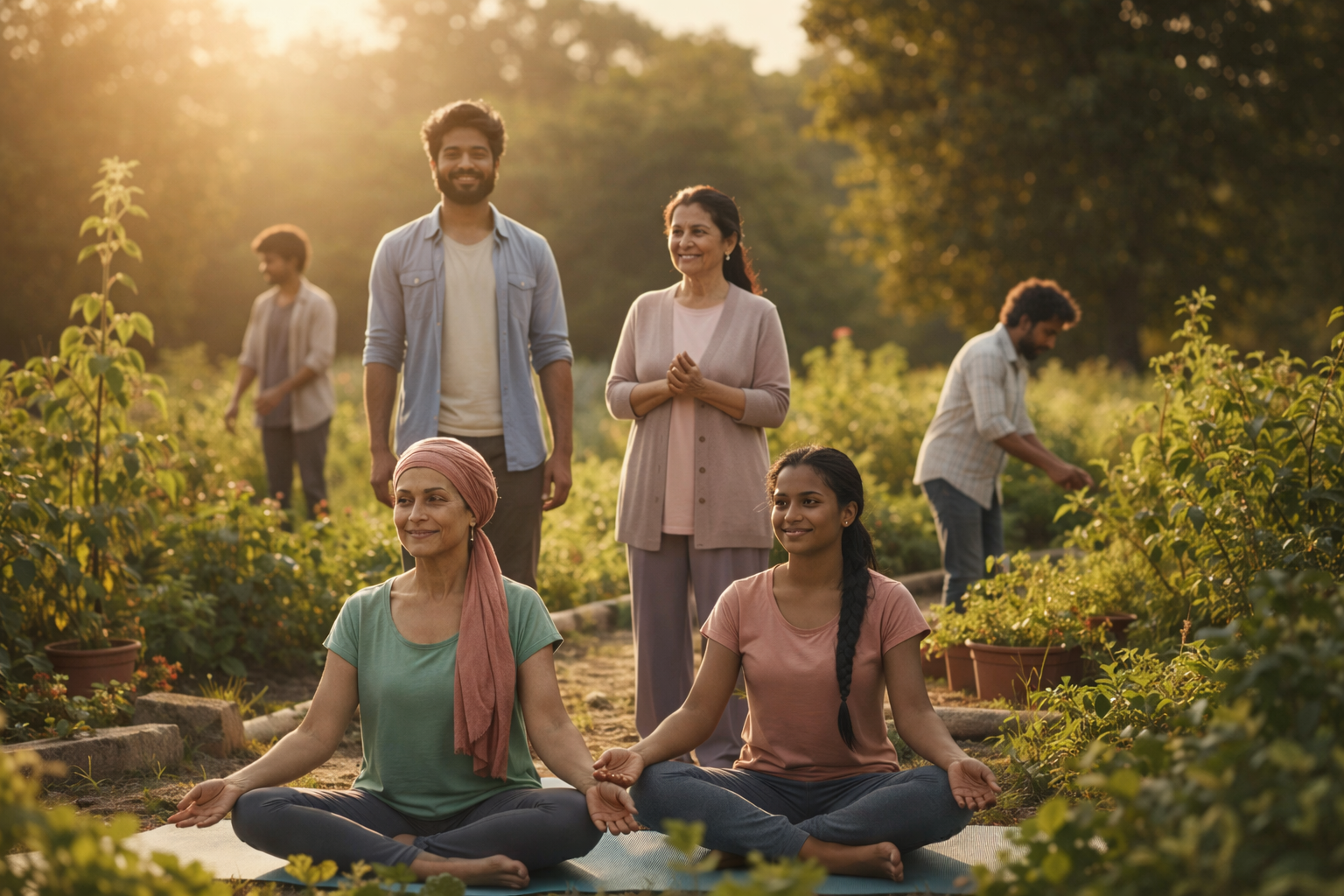
As the founder of EaseMyCancer and a yoga teacher with nine years of experience, my days are full of small moments that remind me why I chose this path: helping people with cancer find relief, strength, and hope through integrated care.
While my work today focuses more on cancer care, yoga is at the heart of everything I do. People come to me for the love of the practice — for steady guidance, compassion, and a space to breathe through stress, pain, recovery, and life’s changes.
Morning: Setting Intentions
I usually start before sunrise. The house is quiet, and I take a few minutes to come back to myself. As a mother of two boys and a former caregiver to my mom, I’ve learned that care begins with self-care.
I sip hot water, take a quick shower, and sit for a short meditation. It isn’t a luxury or a routine — it’s how I arrive steady and present for others. If I don’t tend to my own well-being first, how can I truly hold space for someone else?
This morning, my youngest peeked into the kitchen for a quick hug before school. That small moment reminded me why presence matters more than perfection.
Mid-Morning: The First Connection
After sending my boys to school, I begin teaching. Some mornings start with students who have been with me for years who’ve been with me for years, and that sense of continuity keeps me grounded.
By around 8:30 a.m., my day shifts into cancer-focused work, where the pace slows and the work deepens.These are never rushed. Healing cannot be hurried. People don’t just need exercises — they need to be heard and supported as whole human beings.
By 10, I usually take a little time for my own practice or a strength workout. Around 11:30, I begin calls with patients and families seeking guidance.
Yesterday, a patient called mid-afternoon. She didn’t want yoga — she just needed to tell me about a sleepless night and a fight with her teenage son. By the end of our 20-minute conversation, she laughed softly for the first time that week. Moments like that stay with me.
Midday: Integrated Care Coordination
Cancer care is not one-dimensional, and neither is our approach. I connect with our team — yoga teacher, onco-nutritionist, Psycho-Oncologist, and program coordinator — to align on each person’s care.
Sometimes it’s symptom support, like gastric discomfort. Sometimes it’s adjusting movement for lymphedema. For patients, this coordination means fewer decisions, fewer explanations, and the relief of not doing it alone.
Afternoon: Being Present
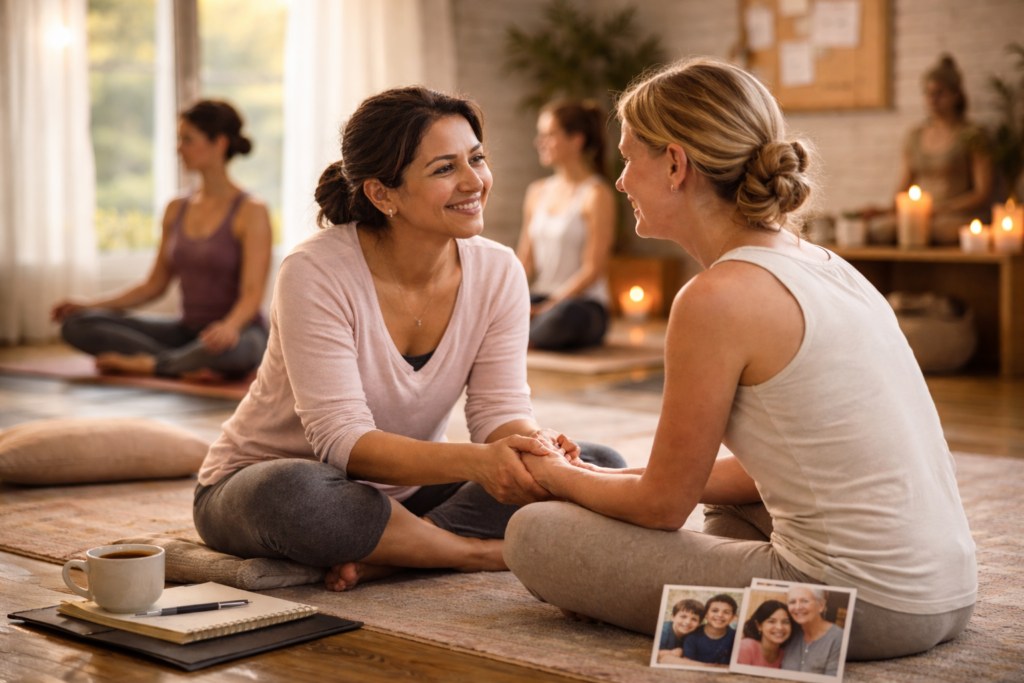
Some afternoons look less like “teaching” and more like simply being there. A patient may not want yoga that day – they may just need to talk.
I listen to fears, grief, and the exhaustion of hearing “stay positive.” I don’t try to fix anything. I stay present, reflect back what I’m hearing, and help them find steadiness inside the uncertainty.
Late Afternoon: The Work Behind the Work
Running EaseMyCancer means wearing many hats. Between sessions, I respond to new inquiries, review notes, update care plans, and prep for the next day — the quiet work that keeps care consistent and reliable.
By 5 PM, I’m back to teaching, carrying that same steadiness into the evening.
Evening: Family, Reflection, and Renewal
I often finish teaching by around 7 PM, then try to return to my family and to myself.
As the founder of EaseMyCancer and a yoga teacher, I’ve realized there’s no strict 8-hour workday here — this work flows with the people I support. My passion comes from witnessing transformation — not just physical healing, but emotional and spiritual renewal. When a patient tells me they felt present in their body for the first time in months, or that they finally slept through the night after weeks of insomnia, these moments fuel me.
At night, I reflect: What went well? What could I do differently? How am I feeling after holding so much? I’m still learning the balance of boundaries and compassion — not carrying everything home, but not becoming distant either.
The Deeper Purpose
People sometimes say I have a gift for connecting. I think it’s because I’ve walked a similar road. Caring for my mom taught me that patients don’t need someone with all the answers. They need someone who shows up, listens deeply, and walks alongside them.
Healing isn’t linear. It’s messy and personal. My role isn’t to fix anyone — it’s to offer tools, support, and compassionate presence as they move through their own journey.
Being a Yoga for Cancer specialist has taught me that yoga doesn’t end when the mat is rolled away. Its real essence is holding space for the full spectrum of being human — allowing pain and peace, fear and hope, to coexist without judgment.
Author
Parul Agarwal