

Living With & Beyond Cancer
Living with cancer can affect physical health, emotional well-being, and daily life. During and after treatment, individuals may experience changes in energy levels, routines, and overall lifestyle. Ongoing support and follow-up care are important parts of cancer care beyond active treatment.
Physical and Lifestyle Changes
Cancer treatment may lead to physical changes such as fatigue, reduced strength, appetite changes, digestive challenges, or limitations in daily activities. These effects may be temporary or long-lasting, depending on the cancer type and treatment received.
Gentle movement, gradual return to activity, and attention to nutrition are often encouraged to help individuals maintain strength and quality of life during and after treatment.
Emotional and Mental Well-Being
Emotional stress, anxiety, and adjustment challenges are common while living with cancer. Changes in body image, uncertainty about recovery, and the emotional impact of diagnosis and treatment can affect mental well-being.
Emotional and social support play an important role throughout treatment and recovery and may help individuals cope with stress and adapt to changes.
Daily Life, Work, and Routines
Cancer and its treatment can disrupt daily routines and responsibilities. Some people may need time away from work or adjustments to their usual activities. With appropriate medical care and support, many individuals gradually return to daily routines and active lives.
Breathing, Digestion, and Functional Support
Some cancers may affect breathing, digestion, or physical function. Individuals may benefit from breathing support, rehabilitation, nutritional care, or other supportive approaches to manage these changes and maintain daily functioning.
Colon Cancer Specific: Living With a Stoma
People with colon cancer may experience physical, emotional, and lifestyle changes during and after treatment. Some individuals may require a temporary or permanent stoma, which is a surgical opening that allows waste to leave the body. With proper care and support, many people return to active, fulfilling lives.
Understanding a Stoma
What Is a Stoma?
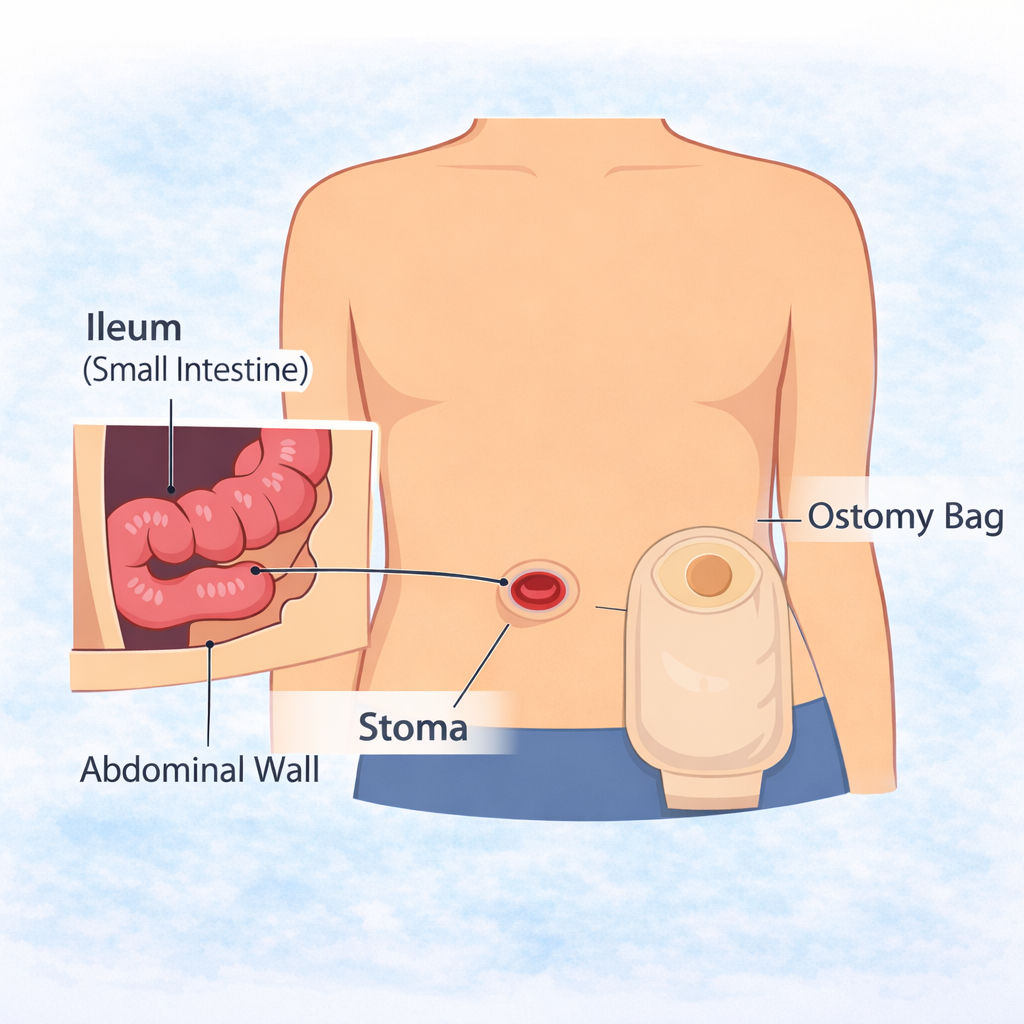
A stoma is a surgically created opening on the abdomen that allows waste (stool or urine) to leave the body when the normal pathway is not usable. It is formed when a part of the intestine is brought to the surface of the abdomen and stitched in place.
A stoma itself is not painful, as it does not have nerve endings. It is usually pink or red in colour and moist in appearance, similar to the inside of the mouth.
Stomas may be temporary or permanent, depending on the location of the cancer, the type of surgery performed, and the patient’s overall condition.
Why Might a Person With Colon Cancer Need a Stoma?
A stoma may be required:
- When part of the colon or rectum is removed
- To allow the bowel to heal after surgery
- If the lower bowel cannot safely reconnect
- In emergency situations such as bowel obstruction or perforation
The decision is made by the surgical team based on medical necessity and patient safety.
What Are Stoma Bags (Ostomy Pouches)?
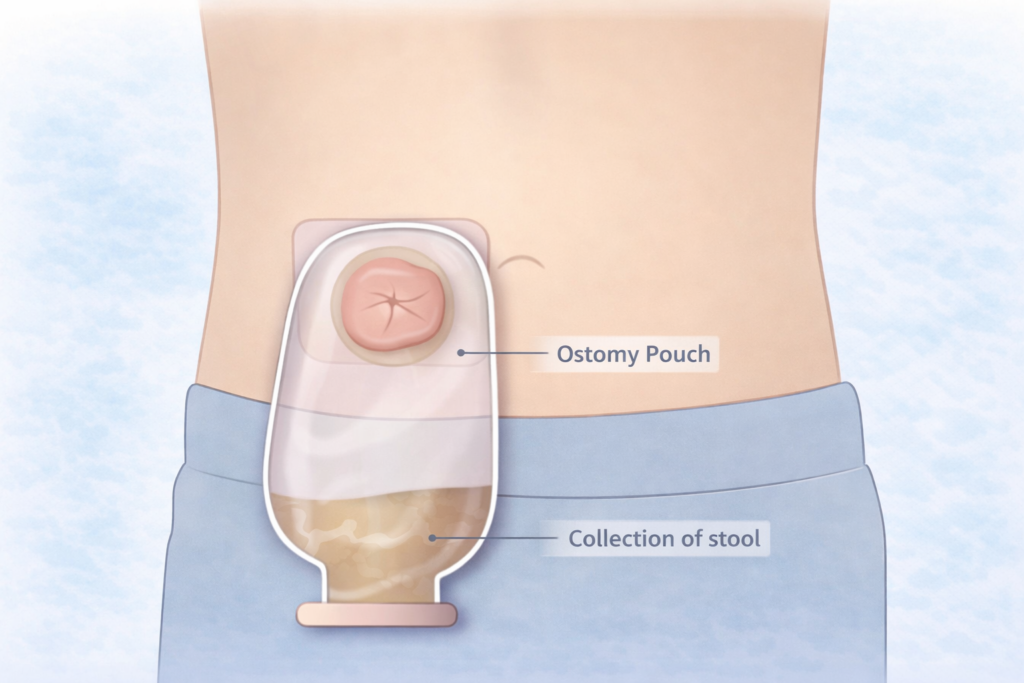
A stoma bag, also called an ostomy pouch, is a medical device worn over the stoma to collect waste from the body. It is securely attached to the skin around the stoma using a special adhesive system.
Modern stoma bags are:
- Discreet and odour-resistant
- Designed to fit comfortably under clothing
- Made for daily activities, including work, travel, and exercise
Types of Stoma Bags
Based on the type of stoma
Colostomy bag
Used when part of the colon opens onto the abdomen. Output is usually more solid.
Ileostomy bag
Used when the small intestine opens onto the abdomen. Output is more liquid and frequent.
(Urostomy bags are used for urinary diversion and are not typically related to colon cancer.)
Based on design
One-piece system
The bag and adhesive base are combined into a single unit.
Simple to use and often preferred initially.
Two-piece system
The adhesive base remains on the skin, and the pouch can be attached or removed separately.
Allows flexibility and may reduce skin irritation.
Based on use
Drainable bags
Can be emptied and reused for a set period. Common for ileostomies.
Closed bags
Used once and discarded. Often used for colostomies with more formed stool.
A stoma care nurse usually helps select the most suitable option for each patient.
Living With a Stoma Bag
General daily use
- The stoma bag is placed over the stoma and securely sealed
- Waste passes naturally into the bag
- The bag is emptied or changed as needed
- Skin around the stoma is cleaned gently to prevent irritation
Living day-to-day
With proper education and support, most people:
- Learn stoma care within days to weeks
- Resume normal eating patterns with guidance
- Return to work, social activities, and travel
- Manage the stoma independently or with minimal assistance
Healthcare teams, including stoma care nurses, provide training, emotional support, and long-term guidance.
Long-Term Effects and Follow-Up Care
After treatment, regular follow-up care helps monitor recovery, manage long-term effects, and detect recurrence. Recovery may involve physical healing, emotional adjustment, and adapting to ongoing lifestyle changes.
In some cases, long-term adjustments may be required, such as dietary changes or managing altered bodily functions. With proper care and guidance, many people adapt successfully over time.
Support During Recovery
Structured support during recovery can help individuals regain confidence, manage ongoing effects, and resume daily activities. Many people benefit from continued medical guidance, emotional support, and practical assistance during this phase.
Closing Note
Living with and beyond cancer is a gradual and evolving process. Comprehensive cancer care extends beyond treatment and includes physical recovery, emotional well-being, lifestyle adaptation, and long-term follow-up to support quality of life.