

🧬 Breast Cancer
🧬 Cervical Cancer
🧬 Ovarian Cancer
🧫 Colon Cancer
🧪 Pancreatic Cancer
🍽️ Esophageal Cancer
🫁 Lung Cancer
🧔 Prostate Cancer
👄 Oral Cancer
🧬 Liver Cancer
🩸 Blood Cancer
🍽️ Stomach Cancer
Overview +
What is Breast Cancer?
Breast cancer is a condition in which certain cells in the breast grow abnormally and multiply in an uncontrolled way. These cells may form a lump or mass and can sometimes spread to nearby tissues or other parts of the body. Breast cancer most commonly affects women. The disease can vary widely in its behavior, growth patterns, and treatment approach.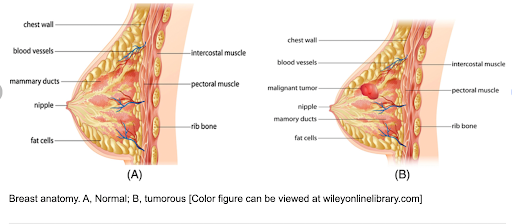
Breast cancer is a condition in which certain cells in the breast grow abnormally and multiply in an uncontrolled way. These cells may form a lump or mass and can sometimes spread to nearby tissues or other parts of the body. Breast cancer most commonly affects women. The disease can vary widely in its behavior, growth patterns, and treatment approach.
Where It Begins +
Which part of the body is involved?
Breast cancer usually begins in the breast tissue, particularly in the milk-producing glands (lobules) or the milk-carrying ducts. The breast also contains fatty tissue, connective tissue, blood vessels, and lymphatic vessels, which may be involved as the disease progresses.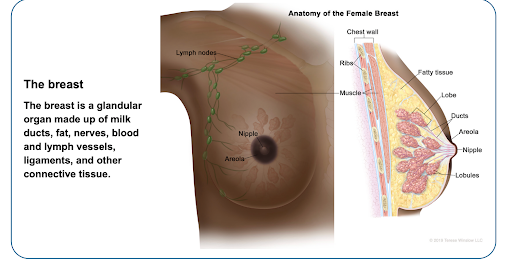
Breast cancer usually begins in the breast tissue, particularly in the milk-producing glands (lobules) or the milk-carrying ducts. The breast also contains fatty tissue, connective tissue, blood vessels, and lymphatic vessels, which may be involved as the disease progresses.
Who Can Be Affected +
Breast cancer may be seen in:
- Women of all adult ages, with risk increasing with age
- Younger women, particularly with certain genetic or hormonal risk factors
- People with or without a family history of breast cancer
How It Develops +
Breast cancer develops when normal breast cells undergo changes affecting how they grow, divide, and die. Altered cells can multiply uncontrollably and may accumulate to form a mass. Over time, these cells may spread into nearby tissue or, in some cases, travel via lymphatic channels or blood vessels to other parts of the body.
Possible Risk Factors +
Factors that may increase the risk of breast cancer include:
- Increasing age
- Family history of breast or related cancers
- Inherited genetic mutations (such as BRCA1 or BRCA2)
- Hormonal factors, including early menstruation, late menopause, or prolonged exposure to estrogen
- Alcohol consumption
- Obesity or low physical activity
- Previous chest radiation
- Certain benign breast conditions
Breast Self-Examination +
A simple way to stay aware of your body
Breast self-examination is a gentle, at-home practice that helps you become familiar with how your breasts normally look and feel. This awareness makes it easier to notice changes early and seek timely medical advice when needed.
A self-exam takes only a few minutes and involves looking at your breasts and feeling them with your fingers. Breast tissue extends beyond the breast mound — up to the armpits, collarbone, and upper abdomen — so the exam includes these areas as well.
A breast self-exam does not replace medical screening or doctor visits. It is a tool for awareness, not diagnosis.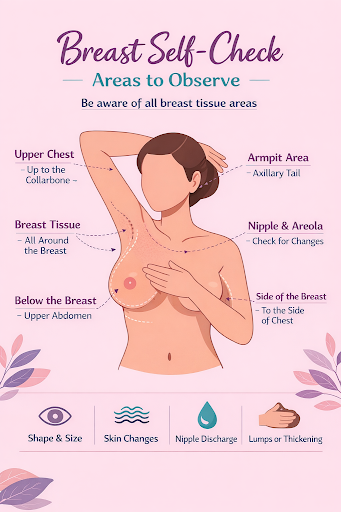
Breast self-examination is a gentle, at-home practice that helps you become familiar with how your breasts normally look and feel. This awareness makes it easier to notice changes early and seek timely medical advice when needed.
A self-exam takes only a few minutes and involves looking at your breasts and feeling them with your fingers. Breast tissue extends beyond the breast mound — up to the armpits, collarbone, and upper abdomen — so the exam includes these areas as well.
A breast self-exam does not replace medical screening or doctor visits. It is a tool for awareness, not diagnosis.
How to Do a Breast Self-Exam +
1. Visual Examination (Looking)
2. Physical Examination (Feeling)
- Stand in front of a mirror with your shirt and bra removed
- Arms relaxed – observe size, shape, symmetry
- Raise arms – check again
- Hands on hips – tighten chest muscles and observe
2. Physical Examination (Feeling)
- Use finger pads with light → medium → firm pressure
- Move in circular pattern
- Cover entire breast and armpit
- Check nipple for discharge
What Needs Attention +
Contact a healthcare provider if you notice:
- A new lump or thickened area
- Skin changes or redness
- Nipple discharge
- Nipple inversion
- Persistent localized pain
Important Notes +
- Self-exams do not replace screening
- Not all lumps are cancerous
- Early detection improves outcomes
Common Warning Signs +
- New or inverted nipple
- Skin dimpling (orange peel appearance)
- Redness or swelling
- Unusual discharge
- Persistent lump
The Seven Ps +
- Position
- Perimeter
- Palpation
- Pressure
- Pattern
- Practice
- Planning
EaseMyCancer Note +
Awareness is not about fear — it’s about familiarity.
Knowing your body helps you care for it better.
1. Overview +
What is Cervical Cancer?
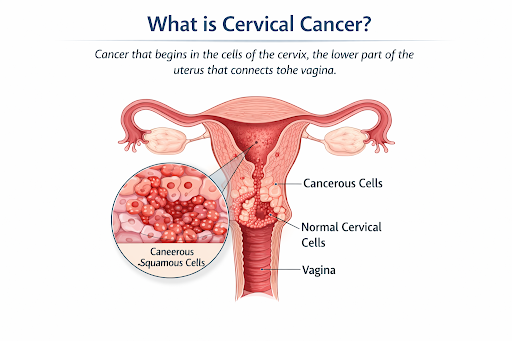
Cervical cancer develops in the cervix, the lower narrow part of the uterus that connects the uterus to the vagina. The cervix plays a key role in menstruation, fertility, and pregnancy. Cervical cancer occurs when cells in this area grow and divide uncontrollably.
Main Types of Cervical Cancer
● Squamous Cell Carcinoma: Starts in the outer cervix (exocervix); most common type.
● Adenocarcinoma: Starts in glandular cells of the inner cervix (endocervix); less common but increasingly seen.
Cervical cancer often develops slowly, and early symptoms may be subtle or absent.
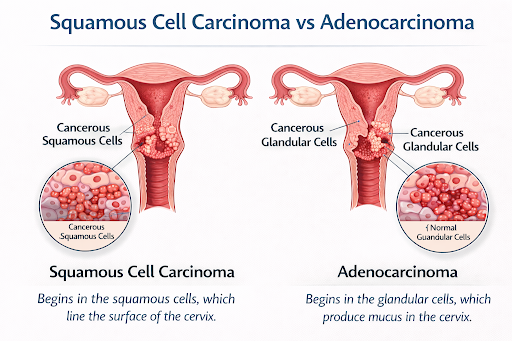
Cervical cancer develops in the cervix, the lower narrow part of the uterus that connects the uterus to the vagina. The cervix plays a key role in menstruation, fertility, and pregnancy. Cervical cancer occurs when cells in this area grow and divide uncontrollably.
Main Types of Cervical Cancer
● Squamous Cell Carcinoma: Starts in the outer cervix (exocervix); most common type.
● Adenocarcinoma: Starts in glandular cells of the inner cervix (endocervix); less common but increasingly seen.
Cervical cancer often develops slowly, and early symptoms may be subtle or absent.
2. Where It Begins +
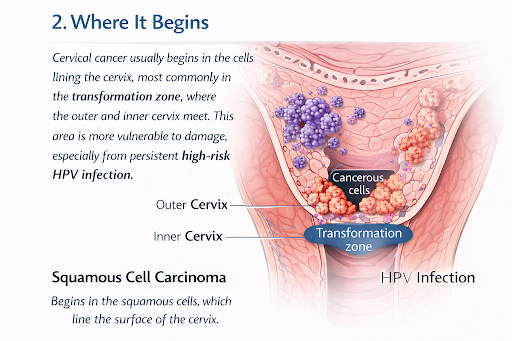
Cervical cancer usually begins in the cells lining the cervix, most commonly in the transformation zone, where the outer and inner cervix meet. This area is more vulnerable to damage, especially from persistent high-risk HPV infection.
3. Who Can Be Affected +
- Caused mainly by persistent high-risk HPV infection
- Most common in people aged 30–50
- Higher risk if not vaccinated against HPV
- Increased risk without regular cervical screening
- Greater risk for those with weakened immune systems
- More common in underserved or low-resource settings, Not linked to personal hygiene, morality, or a single life choice
4. How It Develops +
Cervical cancer usually develops slowly over many years. Persistent high-risk HPV infection can interfere with normal cell growth regulation, leading to abnormal cell changes. These abnormal cells may form precancerous lesions, which can progress to cancer if not detected and treated.
5. Possible Risk Factors +
Factors that may increase risk include:
- HPV infection (main cause)
- Smoking
- Early sexual activity or multiple sexual partners
- Compromised immune system
- Long-term use of oral contraceptives
- Multiple pregnancies
1. Overview +
What is Ovarian Cancer?
Ovarian cancer is a type of cancer that develops in or near the ovaries, which are part of the female reproductive system. The ovaries produce eggs and hormones, including estrogen and progesterone. Ovarian cancer occurs when cells in this area grow and divide in an uncontrolled way.
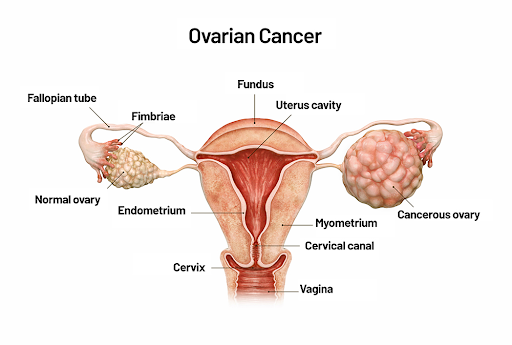
There are several main types of ovarian cancer:
● Epithelial tumors: These start in the outer surface of the ovary and are the most common type.
● Germ cell tumors: These begin in the egg-producing cells and are more common in younger women.
● Stromal tumors: These develop in the hormone-producing cells of the ovary and are less common.
Ovarian cancer can vary in how it develops and presents. Early symptoms may be subtle or nonspecific, so the condition is sometimes identified after it has progressed.
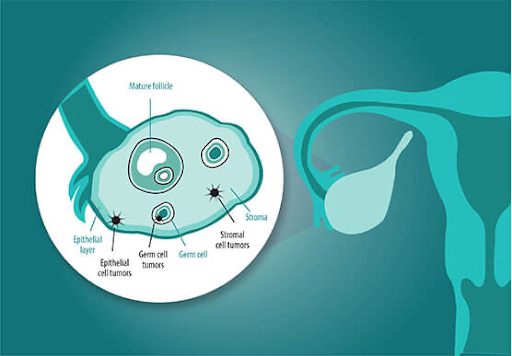
Ovarian cancer is a type of cancer that develops in or near the ovaries, which are part of the female reproductive system. The ovaries produce eggs and hormones, including estrogen and progesterone. Ovarian cancer occurs when cells in this area grow and divide in an uncontrolled way.
There are several main types of ovarian cancer:
● Epithelial tumors: These start in the outer surface of the ovary and are the most common type.
● Germ cell tumors: These begin in the egg-producing cells and are more common in younger women.
● Stromal tumors: These develop in the hormone-producing cells of the ovary and are less common.
Ovarian cancer can vary in how it develops and presents. Early symptoms may be subtle or nonspecific, so the condition is sometimes identified after it has progressed.
2. Where It Begins +
Which part of the body is involved?
Ovarian cancer involves the ovaries, two small organs located on either side of the uterus in the lower abdomen. In some cases, the cancer may begin in nearby tissues, such as the surface lining of the ovary or the cells of the fallopian tubes, but it is still categorized as ovarian cancer.
The ovaries play a key role in reproduction and hormone regulation.
Ovarian cancer involves the ovaries, two small organs located on either side of the uterus in the lower abdomen. In some cases, the cancer may begin in nearby tissues, such as the surface lining of the ovary or the cells of the fallopian tubes, but it is still categorized as ovarian cancer.
The ovaries play a key role in reproduction and hormone regulation.
3. Who Can Be Affected +
Ovarian cancer risk increases with age and is highest in postmenopausal women, most commonly diagnosed between 50–70 years.
● Inherited gene mutations, such as BRCA1, BRCA2, or Lynch syndrome
● Starting menstrual cycle before 12 years old
● Starting menopause after 52 years old
● Women who have never been pregnant or had fewer full-term pregnancies
● Endometriosis (abnormal growth of tissue that lines the inside of the uterus)
● Radiation exposure to the pelvis
Ovarian cancer is often called a “silent” cancer because early symptoms can be subtle, vague, or easily mistaken for common digestive or hormonal issues.
● Inherited gene mutations, such as BRCA1, BRCA2, or Lynch syndrome
● Starting menstrual cycle before 12 years old
● Starting menopause after 52 years old
● Women who have never been pregnant or had fewer full-term pregnancies
● Endometriosis (abnormal growth of tissue that lines the inside of the uterus)
● Radiation exposure to the pelvis
Ovarian cancer is often called a “silent” cancer because early symptoms can be subtle, vague, or easily mistaken for common digestive or hormonal issues.
4. How It Develops +
How does this cancer usually develop?
Ovarian cancer usually develops when cells in or around the ovary undergo changes that cause them to grow abnormally. These cells may divide more rapidly than normal and may not stop growing when they should.
Over time, these abnormal cells can form a tumor. Growth patterns and behavior can differ depending on the type of ovarian cancer. The exact cause of these cellular changes is often unknown.
Ovarian cancer usually develops when cells in or around the ovary undergo changes that cause them to grow abnormally. These cells may divide more rapidly than normal and may not stop growing when they should.
Over time, these abnormal cells can form a tumor. Growth patterns and behavior can differ depending on the type of ovarian cancer. The exact cause of these cellular changes is often unknown.
5. Possible Risk Factors +
Factors that may increase risk
Several factors may increase the risk of ovarian cancer, though having one or more does not mean a person will develop the disease.
Possible risk factors include:
● Increasing age
● Family history of ovarian or related cancers
● Inherited genetic changes such as BRCA1 or BRCA2
● Endometriosis
● Certain reproductive or hormonal factors
● Obesity
Risk is influenced by a combination of genetic, hormonal, and environmental factors.
Several factors may increase the risk of ovarian cancer, though having one or more does not mean a person will develop the disease.
Possible risk factors include:
● Increasing age
● Family history of ovarian or related cancers
● Inherited genetic changes such as BRCA1 or BRCA2
● Endometriosis
● Certain reproductive or hormonal factors
● Obesity
Risk is influenced by a combination of genetic, hormonal, and environmental factors.
1. Overview
What is Colon Cancer?
Colon cancer is a type of cancer that develops in the colon, which is part of the digestive system. The colon helps absorb water and salts from digested food, turns waste into solid stool, and stores the stool until it is expelled from the body. Colon cancer is often grouped with rectal cancer, and together they are called colorectal cancer.
Colon cancer is a type of cancer that develops in the colon, which is part of the digestive system. The colon helps absorb water and salts from digested food, turns waste into solid stool, and stores the stool until it is expelled from the body. Colon cancer is often grouped with rectal cancer, and together they are called colorectal cancer.
2. Where It Begins
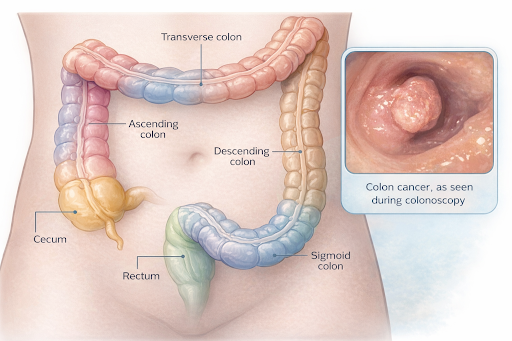
Colon cancer begins in the large intestine (colon), located in the abdomen. The colon is approximately 1.5 metres long and lies between the small intestine and the rectum.
The main parts of the colon include:
● Caecum (beginning of the colon)
● Ascending colon (right side of the abdomen)
● Transverse colon (upper abdomen)
● Descending colon (left side)
● Sigmoid colon (lower, S-shaped section)
● Rectum (final part before stool exits the body)
The main parts of the colon include:
● Caecum (beginning of the colon)
● Ascending colon (right side of the abdomen)
● Transverse colon (upper abdomen)
● Descending colon (left side)
● Sigmoid colon (lower, S-shaped section)
● Rectum (final part before stool exits the body)
3. Who Can Be Affected
Colon cancer may be seen in:
● Adults over the age of 45
● Both men and women
● People with a family history of colorectal cancer
● Increasingly, younger adults in recent years
Cases are rising globally and in India, making awareness important across age groups.
● Adults over the age of 45
● Both men and women
● People with a family history of colorectal cancer
● Increasingly, younger adults in recent years
Cases are rising globally and in India, making awareness important across age groups.
4. How It Develops
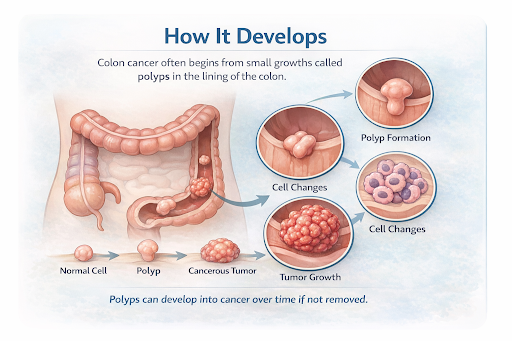
Colon cancer usually develops when normal cells in the lining of the colon undergo abnormal changes and begin to grow uncontrollably. These changes may start as polyps, which are small growths that can gradually become cancerous over time if not detected and removed.
5. Possible Risk Factors
Several factors may increase the risk of developing colon cancer:
● Increasing age
● Family history or inherited genetic conditions
● A diet high in processed or red meat and low in fibre
● Obesity and physical inactivity
● Smoking and heavy alcohol use
● Long-standing inflammatory bowel disease (ulcerative colitis or Crohn’s disease)
● Increasing age
● Family history or inherited genetic conditions
● A diet high in processed or red meat and low in fibre
● Obesity and physical inactivity
● Smoking and heavy alcohol use
● Long-standing inflammatory bowel disease (ulcerative colitis or Crohn’s disease)
1. Overview
What is Pancreatic Cancer?
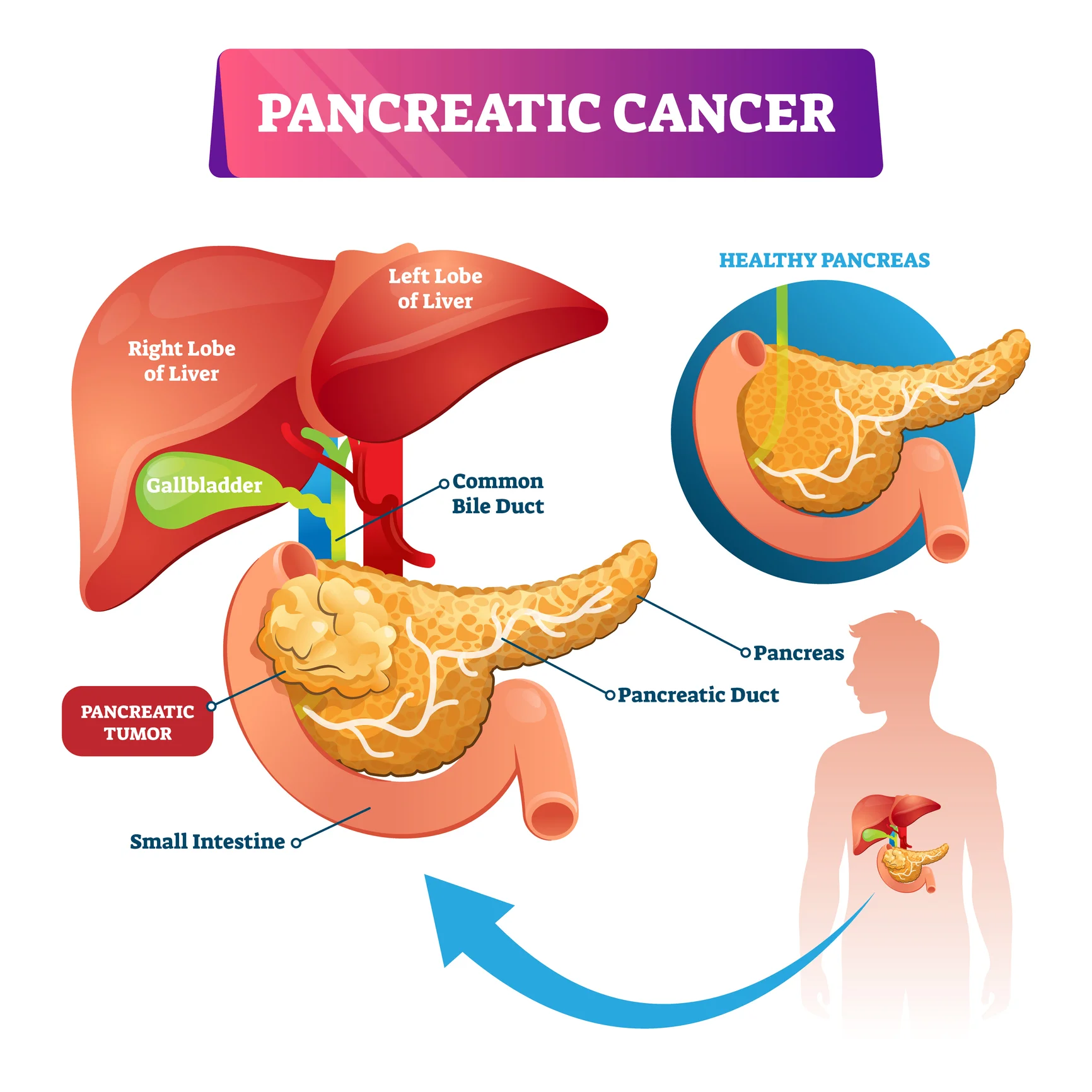
Pancreatic cancer is a type of cancer that starts in the pancreas, an organ that plays an important role in digestion and blood sugar control. It develops when pancreatic cells grow abnormally and form a tumor.
Because the pancreas is located deep inside the abdomen, early pancreatic cancer symptoms are often mild or unclear. As a result, pancreatic cancer is frequently diagnosed at a later stage.
Pancreatic cancer is a type of cancer that starts in the pancreas, an organ that plays an important role in digestion and blood sugar control. It develops when pancreatic cells grow abnormally and form a tumor.
Because the pancreas is located deep inside the abdomen, early pancreatic cancer symptoms are often mild or unclear. As a result, pancreatic cancer is frequently diagnosed at a later stage.
2. Where It Begins
Which part of the body is involved?
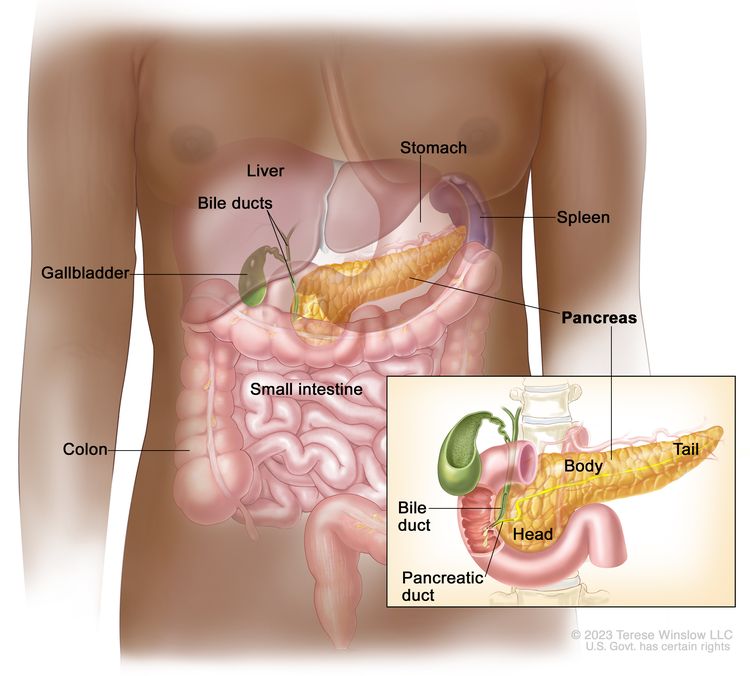
The pancreas is a small gland located behind the stomach and close to the liver and intestines. It performs two key functions:
● Releases digestive enzymes to help break down food
● Produces hormones such as insulin to regulate blood sugar
Most pancreatic cancers begin in the ducts that carry digestive enzymes.
The pancreas is a small gland located behind the stomach and close to the liver and intestines. It performs two key functions:
● Releases digestive enzymes to help break down food
● Produces hormones such as insulin to regulate blood sugar
Most pancreatic cancers begin in the ducts that carry digestive enzymes.
3. Who Can Be Affected
Pancreatic cancer may be seen in adults over the age of 55. It affects people of all genders and backgrounds. Risk may be higher in individuals with long-term health conditions or a family history of pancreatic cancer.
Younger adults can also be affected, particularly when genetic factors are present.
Younger adults can also be affected, particularly when genetic factors are present.
4. How It Develops
How does pancreatic cancer usually develop?
In a healthy pancreas, cells grow and divide in a controlled manner. In pancreatic cancer, damaged cells begin to multiply uncontrollably and form a tumor.
Over time, the tumor may interfere with digestion, block bile flow, or spread to nearby or distant organs.
The main biological types include:
● Pancreatic adenocarcinoma – the most common type
● Pancreatic neuroendocrine tumors (NETs) – rarer and often slower growing
In a healthy pancreas, cells grow and divide in a controlled manner. In pancreatic cancer, damaged cells begin to multiply uncontrollably and form a tumor.
Over time, the tumor may interfere with digestion, block bile flow, or spread to nearby or distant organs.
The main biological types include:
● Pancreatic adenocarcinoma – the most common type
● Pancreatic neuroendocrine tumors (NETs) – rarer and often slower growing
5. Possible Risk Factors
Several factors may increase the risk of pancreatic cancer, though many people develop the disease without a clear cause. These may include:
● Increasing age
● Smoking or tobacco use
● Obesity
● Long-standing diabetes
● Chronic pancreatitis
● Family history of pancreatic cancer
● Certain inherited genetic conditions

● Increasing age
● Smoking or tobacco use
● Obesity
● Long-standing diabetes
● Chronic pancreatitis
● Family history of pancreatic cancer
● Certain inherited genetic conditions
Overview of Esophageal Cancer
Esophageal cancer is a type of cancer that begins in the esophagus—the muscular tube that carries food and liquids from the throat to the stomach. It develops when the cells lining the esophagus undergo abnormal changes and begin to grow uncontrollably, gradually forming a tumor that may spread to nearby tissues or other parts of the body if not detected early.
The esophagus, which is approximately 25–30 cm long, plays a crucial role in digestion by safely transporting swallowed food and fluids into the stomach through coordinated, wave-like muscle movements known as peristalsis. It also helps prevent the backward flow of stomach contents with the support of upper and lower esophageal sphincters and works in coordination with breathing to protect the airway during swallowing. Because the esophagus is essential for smooth and timely digestion, early detection and appropriate medical care are important for effective management and better outcomes.
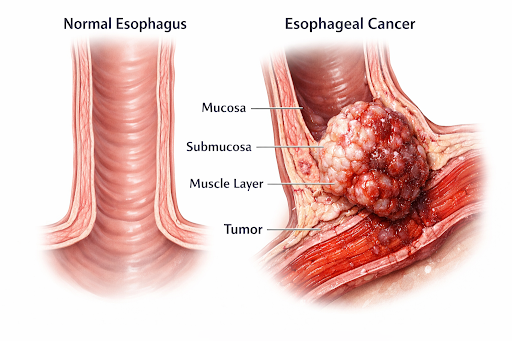
The esophagus, which is approximately 25–30 cm long, plays a crucial role in digestion by safely transporting swallowed food and fluids into the stomach through coordinated, wave-like muscle movements known as peristalsis. It also helps prevent the backward flow of stomach contents with the support of upper and lower esophageal sphincters and works in coordination with breathing to protect the airway during swallowing. Because the esophagus is essential for smooth and timely digestion, early detection and appropriate medical care are important for effective management and better outcomes.
Where It Begins
Which part of the body is involved?
Esophageal cancer affects the lining of the esophagus and may develop in different sections—upper, middle, or lower—depending on the cancer type.
Types of Esophageal Cancer
The two most common types are:
Adenocarcinoma
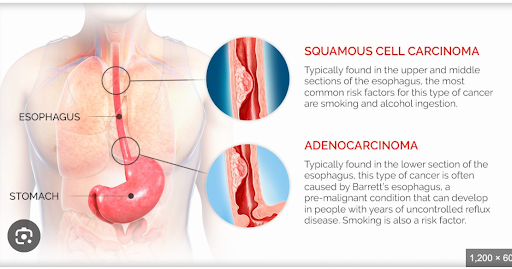
Esophageal cancer affects the lining of the esophagus and may develop in different sections—upper, middle, or lower—depending on the cancer type.
Types of Esophageal Cancer
The two most common types are:
Adenocarcinoma
- Usually develops in the lower part of the esophagus
- Often associated with long-standing acid reflux (GERD) and Barrett’s esophagus
- More commonly observed in individuals with obesity or chronic digestive conditions
- Develops from flat cells lining the esophagus
- Commonly affects the upper or middle portion
- Frequently associated with tobacco and alcohol use
Who Can Be Affected
Esophageal cancer can occur in both men and women, though it is more commonly diagnosed in:
- Adults over 50 years of age
- Men
- Individuals with long-term digestive or lifestyle-related risk factors
How It Develops
The disease typically begins when normal esophageal cells change their structure and growth behavior. These altered cells may multiply over time, forming abnormal tissue that can progress if not identified early.
Possible Risk Factors
Factors that may increase the risk of developing esophageal cancer include:
- Tobacco use (smoking or chewing)
- Excessive alcohol consumption
- Chronic acid reflux or untreated GERD
- Barrett’s esophagus
- Overweight or obesity
- Poor nutritional intake, particularly low consumption of fruits and vegetables
- Increasing age
- Certain medical conditions affecting esophageal movement
- Family history in some cases
Overview
What is Lung Cancer?
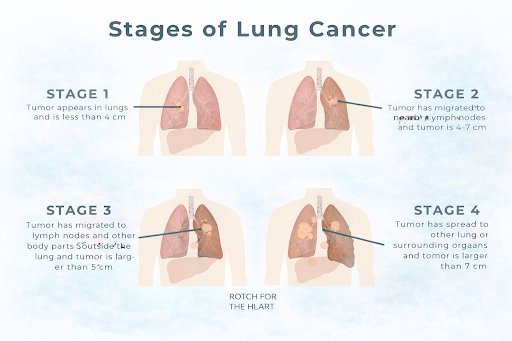
Lung cancer is a type of cancer that begins in the lungs, the organs responsible for breathing. It occurs when abnormal cells in lung tissue grow uncontrollably and form tumours, which can interfere with normal lung function and may spread to other parts of the body.
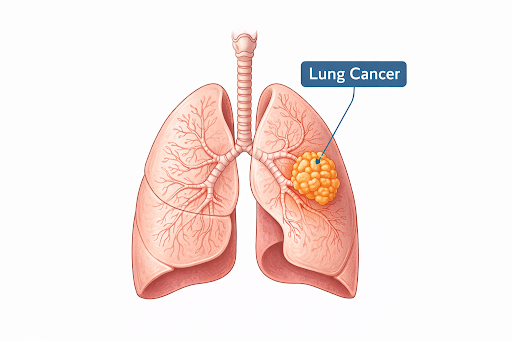
Lung cancer is a type of cancer that begins in the lungs, the organs responsible for breathing. It occurs when abnormal cells in lung tissue grow uncontrollably and form tumours, which can interfere with normal lung function and may spread to other parts of the body.
Where It Begins
Lung cancer begins in the lungs, which are located in the chest inside the ribcage. The lungs are made up of soft, spongy tissue and are divided into sections called lobes.
● The right lung has three lobes
● The left lung has two lobes to make space for the heart
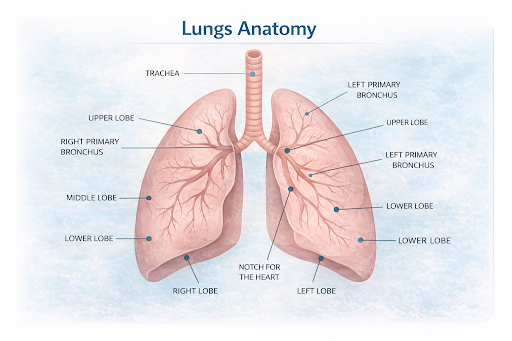
Air travels through the bronchi and bronchioles into tiny air sacs called alveoli, where oxygen enters the blood and carbon dioxide is removed.
● The right lung has three lobes
● The left lung has two lobes to make space for the heart
Air travels through the bronchi and bronchioles into tiny air sacs called alveoli, where oxygen enters the blood and carbon dioxide is removed.
Who Can Be Affected?
Lung cancer may be seen in:
- Adults, especially older individuals
- Both men and women
- People with a history of smoking
- Non-smokers exposed to air pollution or second-hand smoke
How It Develops?
Lung cancer usually develops when normal lung cells undergo changes in their genetic material (DNA). These altered cells may begin to multiply uncontrollably, forming a tumour. Over time, cancer cells may invade nearby tissues or spread to distant organs.
Possible Risk Factors
Several factors may increase the risk of lung cancer, including:
- Tobacco smoking
- Exposure to second-hand smoke
- Air pollution
- Radon gas exposure
- Occupational exposure to substances such as asbestos or diesel fumes
- Family history or genetic susceptibility
- Previous lung diseases
Overview: What is Prostate Cancer?
Prostate cancer occurs when certain cells in the prostate gland begin to grow abnormally and uncontrollably. The prostate is a small gland found only in men, responsible for producing seminal fluid that helps transport sperm.
In many individuals, prostate cancer progresses slowly and may remain confined to the prostate for years.
In some cases, cancer can grow more actively and spread to other parts of the body if not detected and treated early.
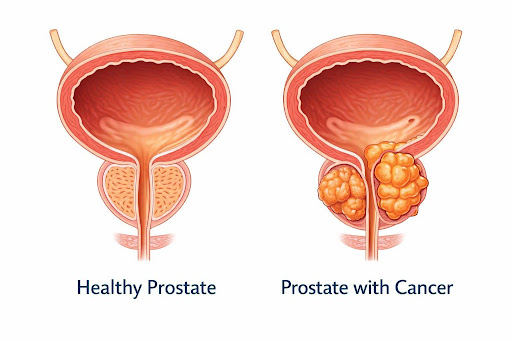
In many individuals, prostate cancer progresses slowly and may remain confined to the prostate for years.
In some cases, cancer can grow more actively and spread to other parts of the body if not detected and treated early.
Where It Begins: Prostate Anatomy
The prostate gland is located below the urinary bladder and in front of the rectum. It surrounds part of the urethra, the tube that carries urine out of the body.
Functions of the Prostate:
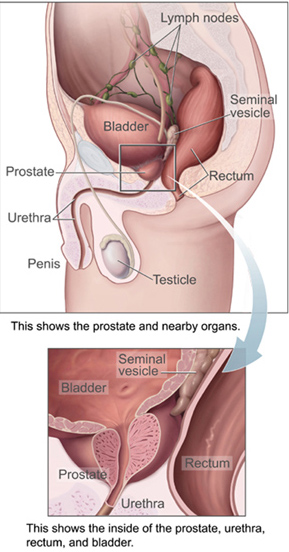
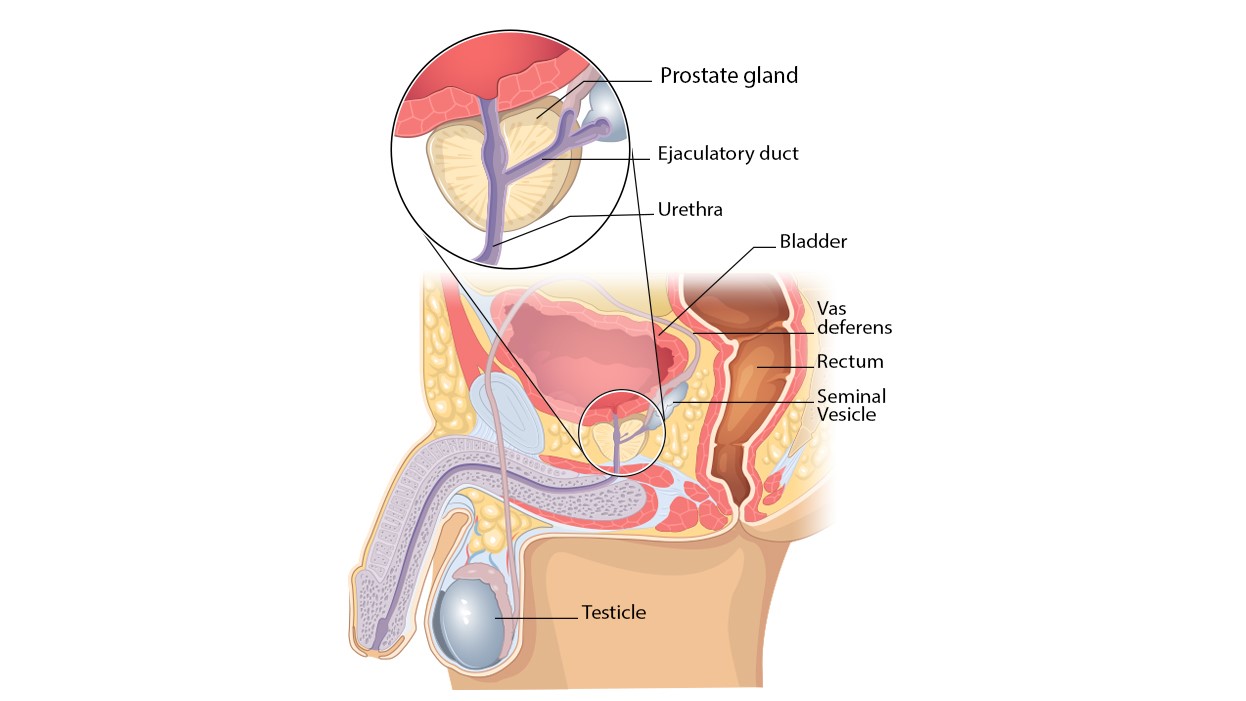
Anatomy of the male pelvic region highlighting the prostate gland
Functions of the Prostate:
- Produces fluid that contributes to semen
- Supports normal urinary and reproductive function
Anatomy of the male pelvic region highlighting the prostate gland
Who Can Be Affected
- More common in men over 50, with risk increasing with age
- Can affect men of all backgrounds
- Higher risk if there is a family history of prostate, breast, or related cancers
- Less commonly, younger men can develop prostate cancer due to inherited genetic factors
How It Develops
Prostate cancer develops when some prostate cells acquire damage that disrupts normal growth.
These cells multiply uncontrollably and live longer than normal cells, forming a growth in the prostate
Prostate adenocarcinoma – arises from fluid-producing glandular cells
Rare subtypes exist but are uncommon
These cells multiply uncontrollably and live longer than normal cells, forming a growth in the prostate
- Often slow-growing and confined to the gland
- Can become aggressive and spread to lymph nodes or bones over time
Prostate adenocarcinoma – arises from fluid-producing glandular cells
Rare subtypes exist but are uncommon
Possible Risk Factors
No single cause, but certain factors may increase risk:
- Increasing age
- Family history of prostate or breast cancer
- Inherited genetic mutations (e.g., BRCA-related changes)
- African or African-Caribbean ancestry
- Diets high in red meat, high-fat dairy, or unhealthy fats
- Excess body weight
Overview Of Oral Cancer
Oral cancer is a type of head and neck cancer that develops in the tissues of the mouth and oral cavity. It most commonly arises from squamous cells, which form the protective lining of the lips, tongue, gums, cheeks, and floor of the mouth.
In its early stages, oral cancer may appear as a small, painless ulcer, sore, or discolored patch, often ignored or mistaken for a minor oral issue. Without timely diagnosis and treatment, these abnormal cells can grow and spread to nearby tissues.
When detected early, oral cancer has significantly better survival rates and improved long-term quality of life, making awareness and regular screening crucial.
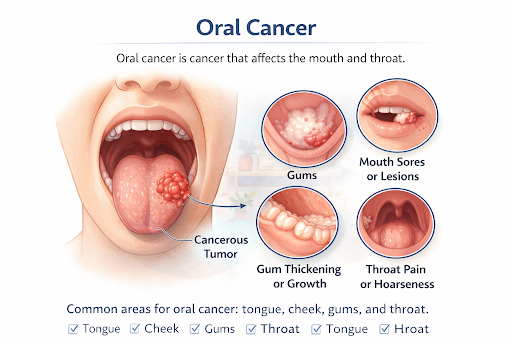
In its early stages, oral cancer may appear as a small, painless ulcer, sore, or discolored patch, often ignored or mistaken for a minor oral issue. Without timely diagnosis and treatment, these abnormal cells can grow and spread to nearby tissues.
When detected early, oral cancer has significantly better survival rates and improved long-term quality of life, making awareness and regular screening crucial.
Where Oral Cancer Begins
Oral cancer can affect multiple areas within the mouth, including:
- Lips – impacting facial movement and speech
- Tongue – affecting taste, speech clarity, and swallowing
- Gums – leading to oral discomfort and loosening of teeth
- Inner cheeks (buccal mucosa) – causing pain and restricted mouth opening
- Floor of the mouth – interfering with tongue movement and swallowing
- Roof of the mouth (palate) – affecting chewing and speech resonance
- Salivary glands – reducing saliva production and causing dry mouth
Effect of Oral Cancer on Daily Oral Functions
As oral cancer progresses, it may lead to:
- Difficulty chewing and swallowing food
- Changes in speech or voice clarity
- Reduced tongue movement and loss of taste
- Persistent mouth pain, numbness, or burning sensation
- Excessive drooling or dry mouth
- Poor oral hygiene and increased risk of infections
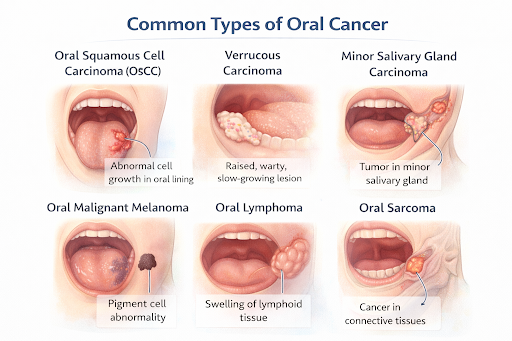
Common Types of Oral Cancer
Oral Squamous Cell Carcinoma (OSCC)
The most common type, originating from the lining cells of the mouth, tongue, lips, and gums.
Verrucous Carcinoma
A low-grade, slow-growing variant of squamous cell carcinoma affecting the oral cavity.
Minor Salivary Gland Carcinoma
Includes cancers like mucoepidermoid carcinoma and adenoid cystic carcinoma arising from small salivary glands in the mouth.
Oral Malignant Melanoma
A rare cancer developing from pigment-producing cells in the oral mucosa.
Oral Lymphoma
Cancer originating from lymphoid tissue within the oral cavity.
Oral Sarcoma
Rare tumors arising from connective tissues such as muscle, bone, or blood vessels in the mouth.
The most common type, originating from the lining cells of the mouth, tongue, lips, and gums.
Verrucous Carcinoma
A low-grade, slow-growing variant of squamous cell carcinoma affecting the oral cavity.
Minor Salivary Gland Carcinoma
Includes cancers like mucoepidermoid carcinoma and adenoid cystic carcinoma arising from small salivary glands in the mouth.
Oral Malignant Melanoma
A rare cancer developing from pigment-producing cells in the oral mucosa.
Oral Lymphoma
Cancer originating from lymphoid tissue within the oral cavity.
Oral Sarcoma
Rare tumors arising from connective tissues such as muscle, bone, or blood vessels in the mouth.
Risk Factors for Oral Cancer
Several factors increase the likelihood of developing oral cancer:
- Tobacco use (smoking, chewing tobacco, gutkha, paan)
- Alcohol consumption, especially when combined with tobacco
- Human Papillomavirus (HPV) infection, particularly HPV-16
- Prolonged sun exposure (especially linked to lip cancer)
- Poor oral hygiene
- A diet low in fruits and vegetables
- Age above 40 years
- Male gender
- Weakened immune system
- Previous history of oral precancerous lesions or oral cancer
Hepatocellular Carcinoma- Liver cancer
Overview of Liver Cancer
Liver cancer is a condition in which abnormal cells begin to grow in the liver, an organ that plays a vital role in digestion, metabolism, detoxification, and energy storage. Because the liver supports many essential body functions, changes in its health can have a wide impact. Liver cancer often develops gradually and may not cause noticeable symptoms in its early stages, making awareness and timely medical evaluation important.
Liver cancer can affect people of different ages and backgrounds, often influenced by underlying liver health, medical conditions, and certain lifestyle factors. A diagnosis can raise many questions and concerns for both patients and their families, highlighting the importance of clear information, regular follow-up, and supportive care throughout the journey.
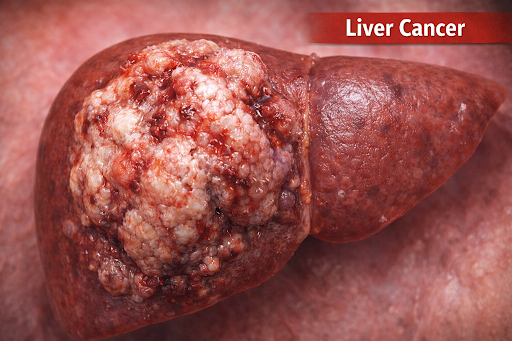
Liver cancer is a condition in which abnormal cells begin to grow in the liver, an organ that plays a vital role in digestion, metabolism, detoxification, and energy storage. Because the liver supports many essential body functions, changes in its health can have a wide impact. Liver cancer often develops gradually and may not cause noticeable symptoms in its early stages, making awareness and timely medical evaluation important.
Liver cancer can affect people of different ages and backgrounds, often influenced by underlying liver health, medical conditions, and certain lifestyle factors. A diagnosis can raise many questions and concerns for both patients and their families, highlighting the importance of clear information, regular follow-up, and supportive care throughout the journey.
Where Liver Cancer Begins
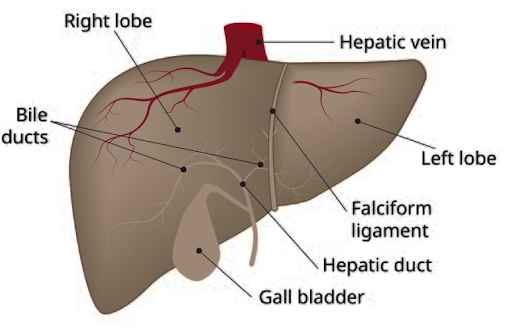
Hepatocellular carcinoma originates in the liver, a large organ situated in the upper right quadrant of the abdomen. The liver is responsible for processing nutrients, producing bile, regulating blood clotting, and removing toxins from the body.
Who is commonly diagnosed?
Hepatocellular carcinoma may be seen in:
- Adults, more commonly over the age of 40
- Men more often than women
- Individuals with long-standing liver conditions
- Populations with higher rates of viral hepatitis
How does Liver cancer usually develop?
HCC typically develops over time as healthy liver cells undergo gradual changes due to chronic inflammation or repeated injury. These altered cells may begin to grow uncontrollably, forming a tumor. In many cases, this process occurs in a liver already affected by scarring (cirrhosis) or long-term liver disease.
Possible Risk Factors
Several factors may increase the likelihood of developing hepatocellular carcinoma, including:
- Chronic hepatitis B or hepatitis C infection
- Liver cirrhosis from any cause
- Long-term alcohol consumption
- Fatty liver disease is linked to obesity or diabetes
- Exposure to certain toxins (such as aflatoxins)
- Genetic or inherited liver disorders
Overview
What are Blood Cancers and Lymphomas?
Blood cancers are a group of cancers that affect the blood, bone marrow, or lymphatic system. Lymphomas are a type of blood cancer that primarily involves the lymphatic system, which plays an important role in immunity. These cancers occur when certain blood-forming or immune cells begin to grow and behave abnormally.
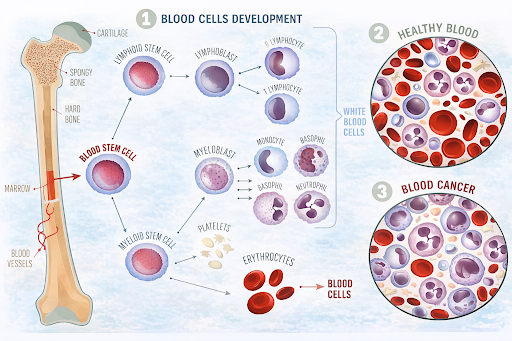
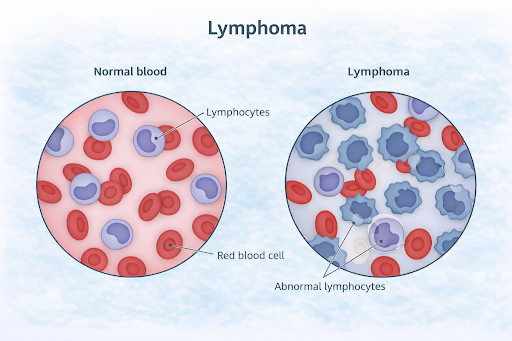
Blood cancers are a group of cancers that affect the blood, bone marrow, or lymphatic system. Lymphomas are a type of blood cancer that primarily involves the lymphatic system, which plays an important role in immunity. These cancers occur when certain blood-forming or immune cells begin to grow and behave abnormally.
Where It Begins
Blood cancers and lymphomas may begin in:
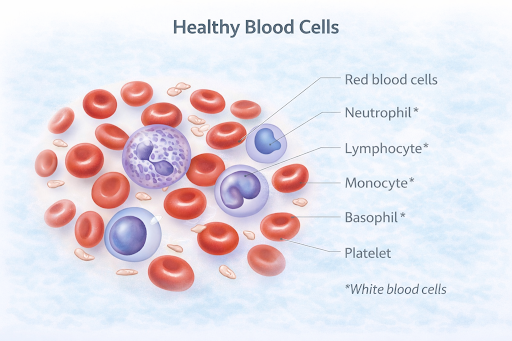
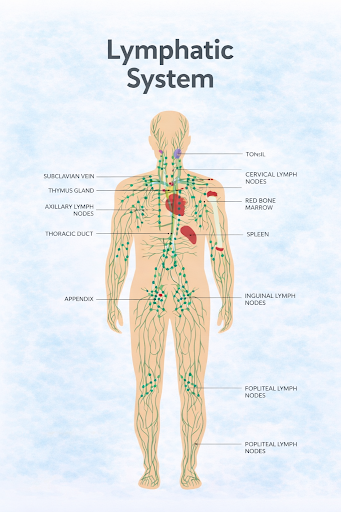
Because these systems are interconnected, abnormal cells may circulate or appear in multiple areas.
- Bone marrow, where blood cells are produced
- Bloodstream, which carries cells throughout the body
- Lymphatic system, including lymph nodes, spleen, thymus, and lymph vessels
Because these systems are interconnected, abnormal cells may circulate or appear in multiple areas.
Who Can Be Affected
Blood cancers and lymphomas may be seen in:
- Both children and adults, depending on the subtype
- Slightly higher rates in older adults for many forms
- All genders, with some subtypes being more common in one gender
- People with certain immune-related or genetic conditions
How does it develop?
These cancers typically develop when blood or immune cells undergo genetic changes that alter their growth and division. Instead of maturing normally, these cells may multiply uncontrollably and fail to function properly. Over time, they can crowd out healthy cells or interfere with normal immune responses.
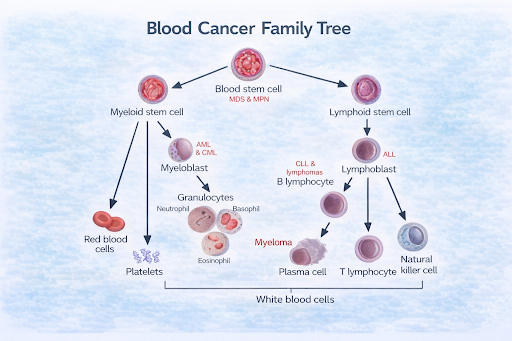
Leukaemia: Types and Staging
Types of Leukaemia
Leukaemia is commonly grouped based on how quickly it develops and the type of blood cell involved.
Acute Leukaemia
Develops rapidly and involves immature blood cells. Symptoms often appear suddenly and require prompt medical attention.
Chronic Leukaemia
Develops more slowly and involves more mature blood cells. Some people may have few or no symptoms initially.
Leukaemia is also classified by the blood cell affected:
Staging of Leukaemia
Leukaemia is not staged like solid tumors. Instead, doctors assess:
Lymphoma: Types and Staging
Types of Lymphoma
There are two main types:
Hodgkin Lymphoma
Characterised by the presence of a specific abnormal cell type.
Non-Hodgkin Lymphoma
A larger group with many subtypes that vary in how they grow and respond to treatment.
Lymphomas may also be described as:
Staging of Lymphoma
Lymphoma is staged based on how far it has spread within the body:
Leukaemia: Types and Staging
Types of Leukaemia
Leukaemia is commonly grouped based on how quickly it develops and the type of blood cell involved.
Acute Leukaemia
Develops rapidly and involves immature blood cells. Symptoms often appear suddenly and require prompt medical attention.
Chronic Leukaemia
Develops more slowly and involves more mature blood cells. Some people may have few or no symptoms initially.
Leukaemia is also classified by the blood cell affected:
- Lymphocytic Leukaemia – affects lymphocytes
- Myeloid Leukaemia – affects myeloid cells
Staging of Leukaemia
Leukaemia is not staged like solid tumors. Instead, doctors assess:
- Blood and bone marrow test results
- The number of abnormal cells
- Effects on organs such as the lymph nodes, liver, or spleen
Lymphoma: Types and Staging
Types of Lymphoma
There are two main types:
Hodgkin Lymphoma
Characterised by the presence of a specific abnormal cell type.
Non-Hodgkin Lymphoma
A larger group with many subtypes that vary in how they grow and respond to treatment.
Lymphomas may also be described as:
- Slow-growing (indolent)
- Fast-growing (aggressive)
Staging of Lymphoma
Lymphoma is staged based on how far it has spread within the body:
- Stage I – Involvement of a single lymph node region or site
- Stage II – Involvement of two or more regions on the same side of the diaphragm
- Stage III – Involvement on both sides of the diaphragm
- Stage IV – Spread to organs outside the lymphatic system
Possible Risk Factors
Several factors may increase the risk of blood cancers and lymphomas, including:
- Certain genetic conditions or family history
- Weakened immune system, including autoimmune diseases
- Previous cancer treatments, such as chemotherapy or radiation
- Exposure to specific chemicals or radiation
- Certain viral infections, such as Epstein–Barr virus (EBV) or HIV
Overview of Stomach Cancer
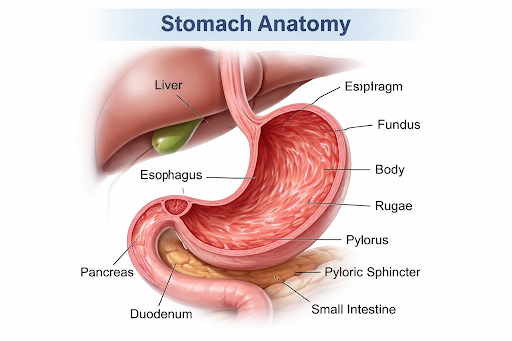
Stomach cancer, also known as gastric cancer, is a type of cancer that develops in the inner lining of the stomach, a vital organ of the digestive system. The stomach is a muscular, hollow organ located in the upper abdomen that stores food after swallowing and helps break it down through muscular movement, stomach acid, and digestive enzymes. It plays an essential role in digestion by converting food into a semi-liquid form, protecting the body from harmful bacteria, and gradually releasing digested food into the small intestine for nutrient absorption.
Stomach cancer usually develops slowly over time as abnormal cells grow in the stomach lining, often without early symptoms, making awareness of stomach health and timely medical evaluation important.
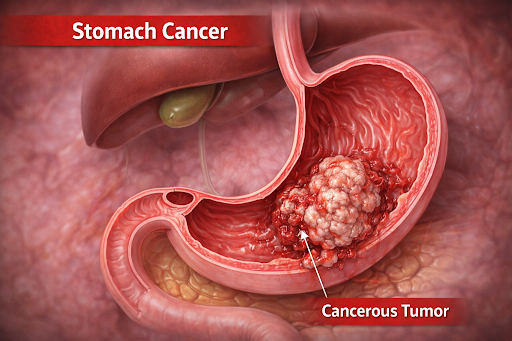
Stomach cancer usually develops slowly over time as abnormal cells grow in the stomach lining, often without early symptoms, making awareness of stomach health and timely medical evaluation important.
Where Stomach Cancer Begins
Stomach cancer begins in the stomach, a muscular, hollow organ located in the upper abdomen between the esophagus and the small intestine. The inner lining of the stomach, which produces digestive acids and enzymes, is most commonly involved.
Who Can Be Affected
Stomach cancer may be seen in:
- Adults over the age of 50
- Men more commonly than women
- People with long-standing stomach conditions
- Populations in certain geographic regions, particularly parts of Asia and Eastern Europe
How Stomach Cancer Develops
Stomach cancer usually develops when healthy cells in the stomach lining undergo changes that cause them to grow uncontrollably. These altered cells may form a tumor over time. The process is often slow and may occur over several years, sometimes beginning with chronic inflammation or changes in the stomach lining.
Possible Risk Factors
- Chronic infection with Helicobacter pylori
- Diets high in smoked, salted, or processed foods
- Low intake of fruits and vegetables
- Smoking and excessive alcohol consumption
- Family history of stomach cancer
- Certain inherited genetic conditions
- Long-term stomach inflammation or ulcers